

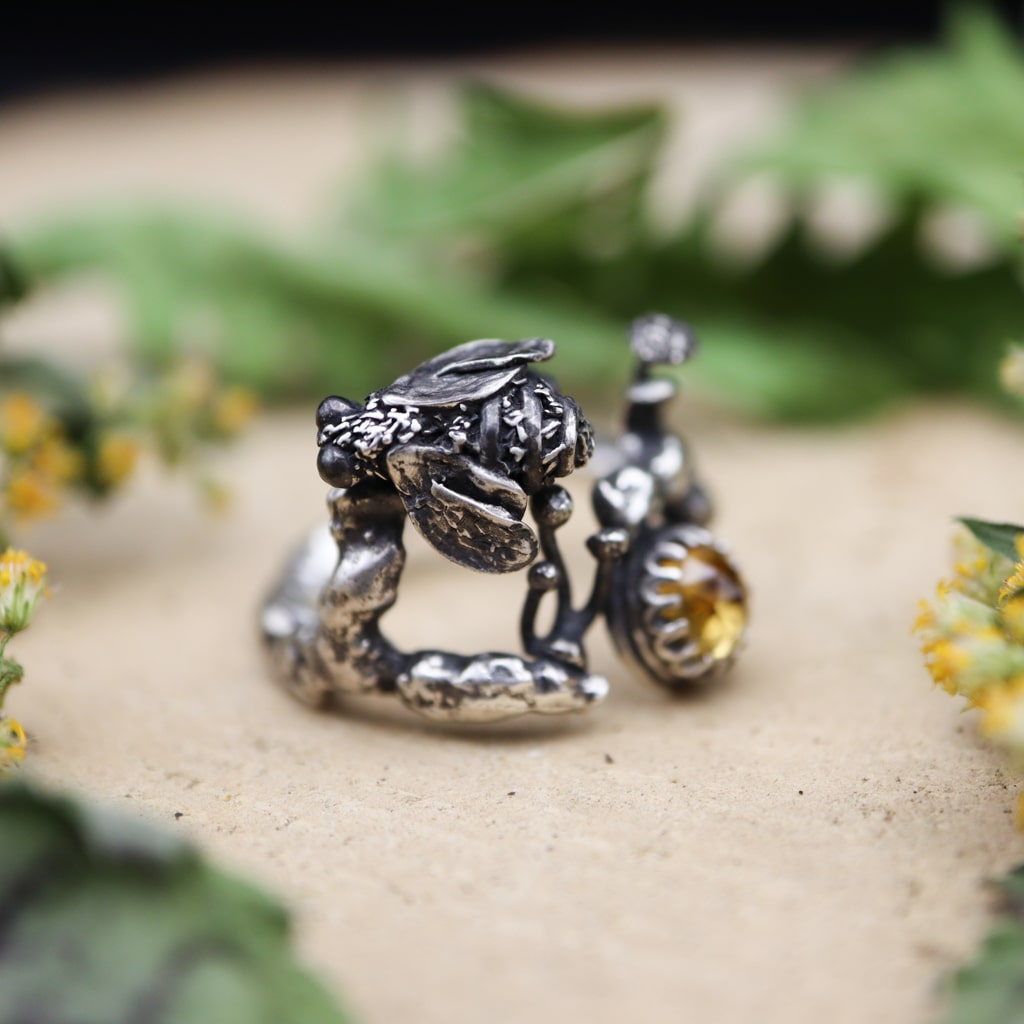
The Bees That Actually Need Your Help (And It's Not Who You Think)
The Bees That Actually Need Your Help (And It's Not Who You Think)
Every spring and summer, well meaning people put up little wooden bee houses in their gardens, buy jars of local honey, and share posts about saving the bees. The impulse is good. The bees they are thinking of, however, are not the ones who need saving.
The honeybee is not native to North America.
She arrived with European settlers in the early 1600s, carried across the Atlantic deliberately for honey production and crop pollination. She is not a wild creature in need of rescue. She is livestock, as domesticated as a dairy cow, managed and restocked by humans in numbers that have never been higher. Honeybee populations are not in decline. By most measures they are the most numerous bee on the planet.
Meanwhile, the bees that actually built North America's ecosystems are disappearing, and most people do not even know their names.
4,000 Species and Counting
There are approximately 4,000 native bee species in the United States. Ten percent of them have not yet been named or formally described by scientists. Many are smaller than a grain of rice. Most people walk past dozens of them every single day without ever registering that they exist.
These are the bees that have been here since long before any European ship crossed the Atlantic. They evolved alongside our native plants, shaping them and being shaped by them over millions of years. Twenty to forty five percent of native bee species are pollen specialists, meaning they can only use pollen from one specific plant species or genus. If that plant disappears, the bee disappears with it. If the bee disappears, the plant cannot reproduce. They are locked together in relationships so specific and so ancient that nothing else can step in and fill the gap.
A honeybee cannot replace them. Not even close.
Research from Cornell University found that native bees are two to three times more effective as pollinators than honeybees. The reason is straightforward. Honeybees are primarily interested in nectar. Native bees are pollen collectors. An individual visit from a native bee is worth far more to a plant than an individual visit from a honeybee.
The Part Nobody Wants to Say Out Loud
Here is where it gets uncomfortable.
Honeybees do not just fail to help native bees. They actively harm them.
European honeybees outcompete native bees for nectar and pollen, depleting the floral resources that native bees depend on to survive and reproduce. Studies have found that this competition forces native bees to travel farther, forage over larger areas, and expend more energy than their bodies can sustain. They produce fewer offspring. They produce more males and fewer females, which further reduces their populations. Weakened and malnourished, they become more susceptible to disease and less likely to survive winter.
And then there are the pathogens.
Managed honeybee colonies carry viruses and diseases that native bees have no immunity to. As beekeeping has spread into cities and suburbs and conservation areas, those pathogens have spread with it, spilling over into wild native bee populations that have never encountered them before. Research has found that placing honeybee hives near natural areas creates centers of disease replication that increase the likelihood of spillover to native species.
Honeybees also sometimes preferentially forage on invasive plants, pollinating them and helping them spread, which crowds out the native flora that native bees depend on for survival.
A study from Montreal found that as the number of honeybees in an area increased, the number of native bee species decreased. This is not a coincidence.
The Xerces Society, one of the most respected invertebrate conservation organizations in the world, puts it plainly: beekeeping is not bee conservation. Managed honeybees are domesticated livestock, and their very presence has the potential to harm native species.
As Scott Black of the Xerces Society has said, keeping honeybees to save the bees is like raising chickens to save the birds.
What Actually Helps
The honeybee is not a villain. She is doing exactly what she was bred to do, in a place she did not evolve for, in numbers that the landscape was never designed to support. The problem is not her existence. The problem is that she has become the symbol of bee conservation, absorbing the attention and funding and goodwill that should be going to the 4,000 species that have no one advocating for them.
If you want to actually help bees, here is what the science says:
Plant native flowers. Native bees evolved alongside native plants and depend on them in ways that no ornamental or exotic flower can replace. Goldenrod, wild bergamot, native sunflowers, milkweed, ironweed. These are the plants that keep native bees alive.
Leave the leaves. Most native bees nest in the ground or in hollow stems and leaf litter. Every time someone rakes their yard clean they are destroying habitat that took years to establish.
Skip the pesticides. This one is straightforward.
Leave bare patches of ground. Many native bees are ground nesters and need undisturbed, sunny, well drained soil to make their homes.
And notice the small ones. The tiny sweat bee working the goldenrod at the edge of your yard. The mining bee disappearing into a hole in the ground. The mason bee tucked into a hollow stem. They have been here since long before we arrived, doing work that nothing else can do, and they deserve our attention far more than the bee on the honey jar.




%0AEvery%20spring%20and%20summer,%20well%20meaning%20people%20put%20up%20little%20wooden%20bee%20houses%20in%20their%20gardens,%20buy%20jars%20of%20local%20honey,%20and%20share%20...)
Leave a comment
This site is protected by hCaptcha and the hCaptcha Privacy Policy and Terms of Service apply.