

New Hampshire's State Butterfly Is Being Killed by the Flower Everyone Comes to Photograph
It is early June in New Hampshire and the fields are full of lupine. Tall purple spikes rising from the roadsides, whole meadows turned violet, tourists pulling over to take photographs. There are festivals devoted to these flowers. There are postcards. There are people who plan their entire summer vacation around them.
I understand the impulse completely. They are genuinely beautiful.
But here is what the postcards don't tell you.
The Lupine You Are Looking At Is Not From Here
The tall, showy lupine filling the roadsides and former dairy fields of New Hampshire is Lupinus polyphyllus, commonly called bigleaf lupine or garden lupine. It is native to the western United States. It was introduced to the Northeast as a garden plant and for roadside stabilization in the early to mid 1900s, escaped cultivation, and spread rapidly across the landscape. It is considered an invasive species.
It spreads easily through prolific seed production and forms dense stands that displace native plant populations. It fixes nitrogen in the soil, which sounds helpful but actually changes soil chemistry in ways that favor its own continued dominance over the native plants that evolved here.
New Hampshire actively promotes these fields for tourism. There are lupine festivals. The state plants L. polyphyllus in highway medians. And most people who stop to admire them have no idea they are looking at an ecological problem wearing a very pretty costume.
We Have Our Own Lupine
New Hampshire's native lupine is Lupinus perennis, the sundial lupine, and it is a completely different plant with a completely different story.
It is smaller and more delicate than its invasive cousin, growing to about two feet rather than three to six. Its leaves have five to seven leaflets arranged like the hands of a clock, which is how it got the name sundial lupine. It grows in dry, sandy, infertile soils, the kind of lean, open pine barren habitat that most plants find inhospitable. It is rare in New Hampshire, listed as threatened, with only about fifteen known extant populations in the entire state.
It is also one of the most important plants in the northeastern ecosystem, for one specific and extraordinary reason.
The Butterfly That Cannot Eat Anything Else
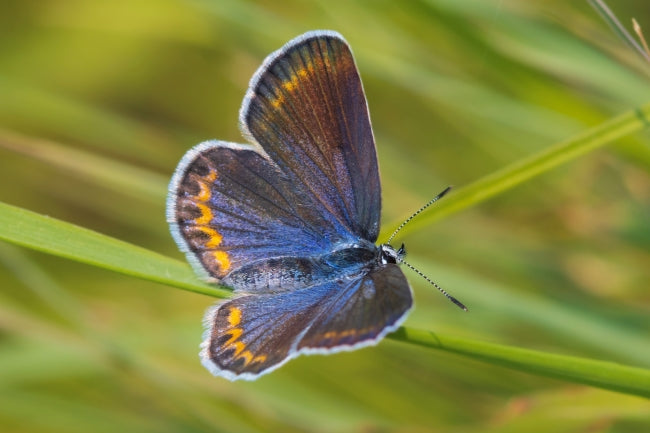
The Karner blue butterfly is New Hampshire's official state butterfly. It is also federally endangered, one of the most imperiled insects in the northeastern United States. And the Karner blue caterpillar can eat exactly one thing: the leaves of Lupinus perennis.
Not any lupine. Not the tall purple fields of L. polyphyllus that visitors photograph in June. Only the native sundial lupine. The two plants look superficially similar, and the Karner blue butterfly cannot reliably tell them apart. Female butterflies will lay their eggs on L. polyphyllus just as they would on the native species. The eggs hatch. The caterpillars attempt to feed. And then they die, because the non-native lupine is toxic to them.
Read that again. The invasive lupine does not just fail to support the Karner blue. It actively kills its larvae.
And it gets worse. Lupinus polyphyllus can hybridize with the native sundial lupine, creating hybrid plants that are also unsuitable for Karner blue caterpillars. So the invasive lupine does not just kill larvae directly. It corrupts the native lupine population itself, producing plants that look like the real thing but cannot sustain the butterfly that depends on it. Simply having L. polyphyllus growing near Karner blue habitat can quietly undermine the native lupine even when the butterflies manage to find it.
By 1999, the Karner blue butterfly was extirpated from New Hampshire. Gone. The last one was observed in a power line corridor in Concord, and then there were none. The state butterfly of New Hampshire had vanished from New Hampshire.
The Remarkable Story of What Happened Next
New Hampshire Fish and Game biologists, working with the US Fish and Wildlife Service, were not willing to accept that outcome. Beginning in 2000, they started collecting Karner blue butterfly eggs from a stable population in New York. They developed captive rearing techniques in what had been an old military barracks at the National Guard base in Concord, and began releasing thousands of adult butterflies into a carefully managed stretch of pine barren habitat near Concord Municipal Airport.
They also began restoring that habitat. Controlled burning to clear encroaching vegetation. Brush cutting. Native plant restoration. The creation and maintenance of exactly the kind of open, sandy, sun-drenched pine barren where Lupinus perennis thrives and the Karner blue can complete its life cycle.
In 2016, surveys documented more than 3,000 Karner blue butterflies at the Concord Pine Barrens, meeting the federal recovery goal for the first time. The state butterfly had come home.
That work continues. It requires ongoing management, controlled burns, and constant vigilance. And it depends entirely on the presence of our quiet, unassuming, easily overlooked native sundial lupine.
What This Means If You Have a Garden
If you want to plant lupine in New Hampshire, plant Lupinus perennis. It is harder to find than the showy garden varieties and it requires dry, sandy, well-drained soil, but it is genuinely native and genuinely valuable. When purchasing, look for sustainably sourced seed from non-hybridized plants, and make sure you are getting the real thing and not a hybrid that has been crossed with L. polyphyllus. It is not an easy feat as even knowledgeable friends have been sold seeds of the non native lupine.
And if you are planting anywhere near known Karner blue habitat, this is not optional. Planting the wrong lupine near pine barren habitat can have devastating consequences for a population that took two decades of extraordinary effort to rebuild.
The purple fields are beautiful. I am not going to pretend otherwise. But beauty and belonging are two different things, and the plants that belong here have a story worth knowing.
A Note From Me
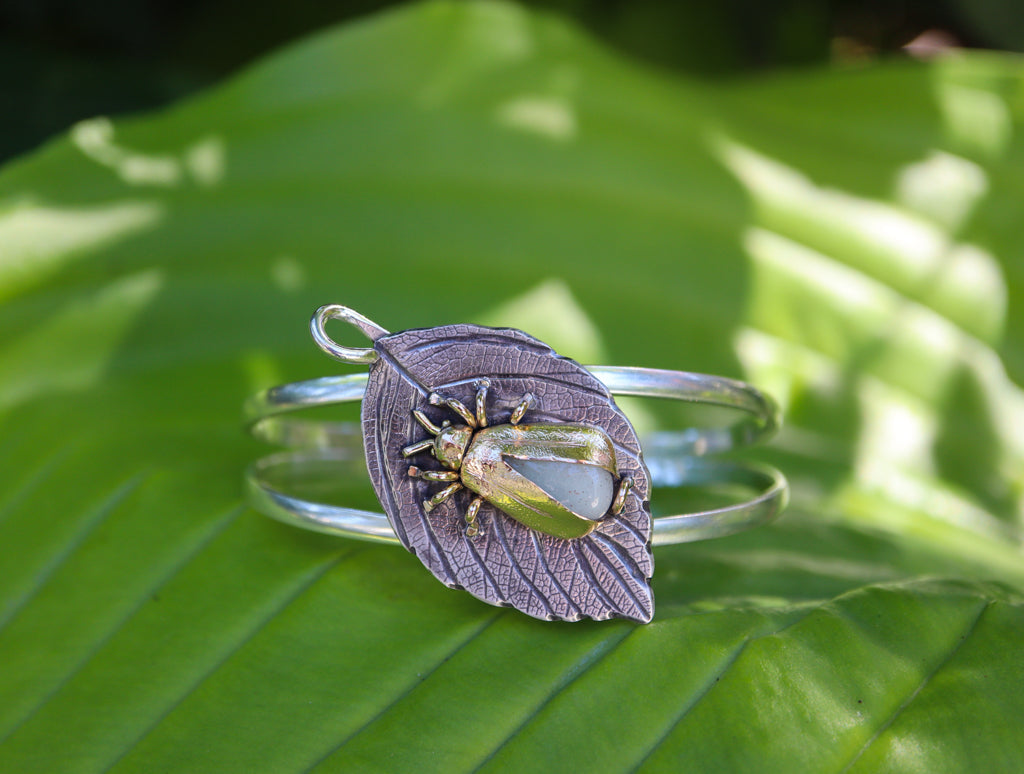
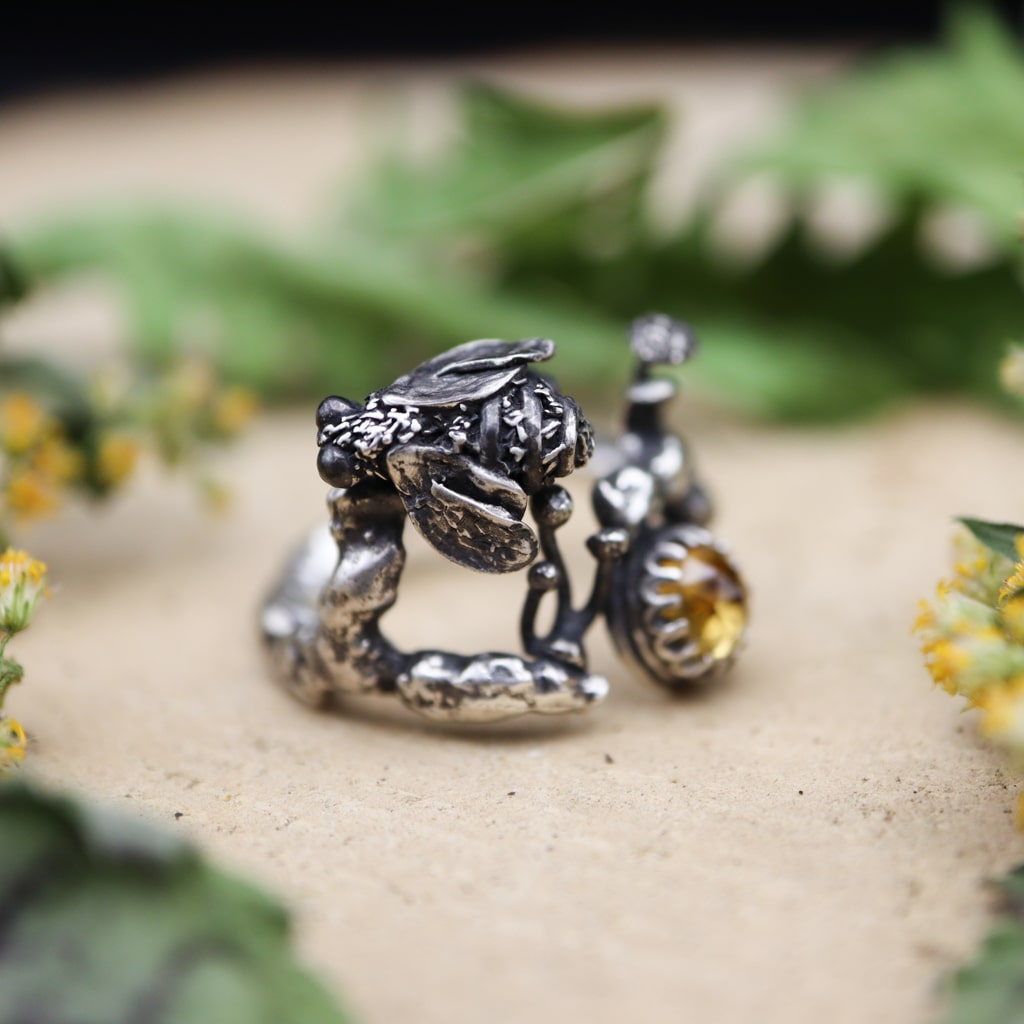
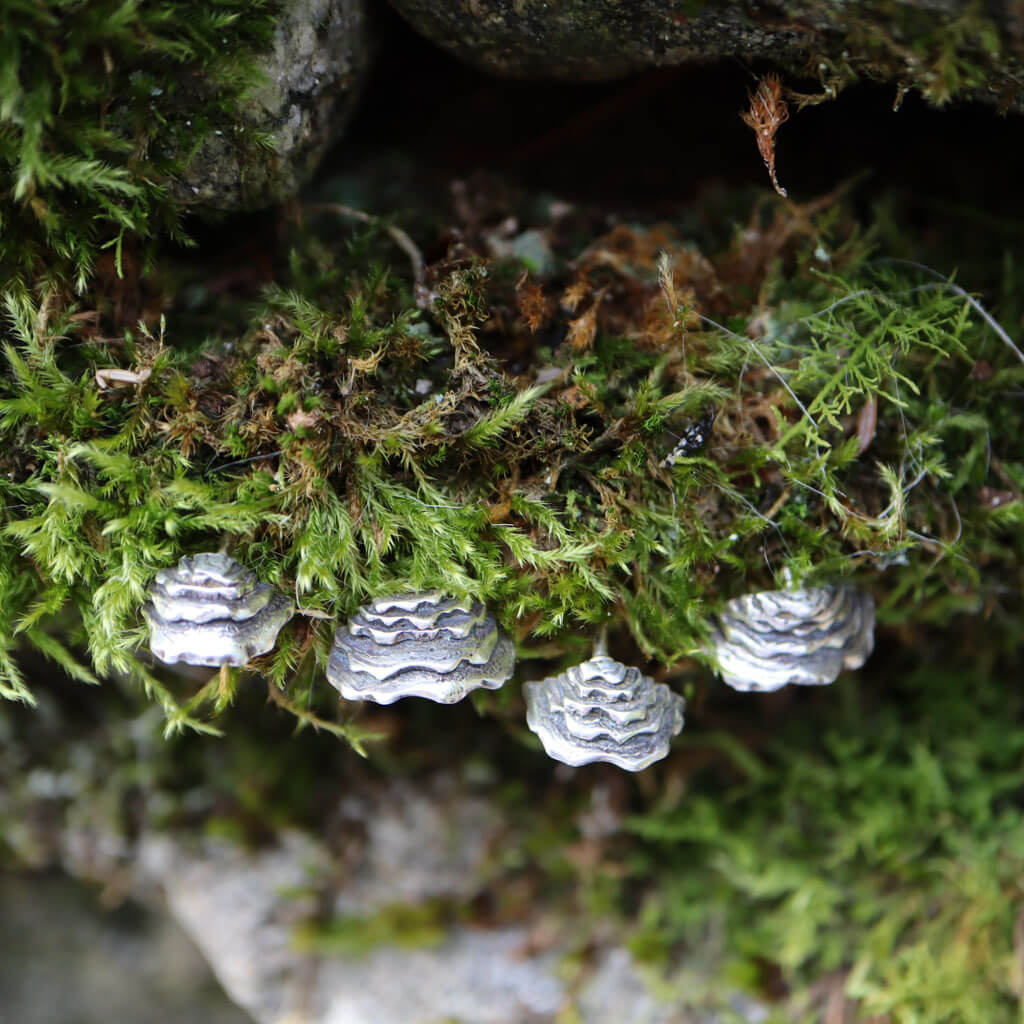
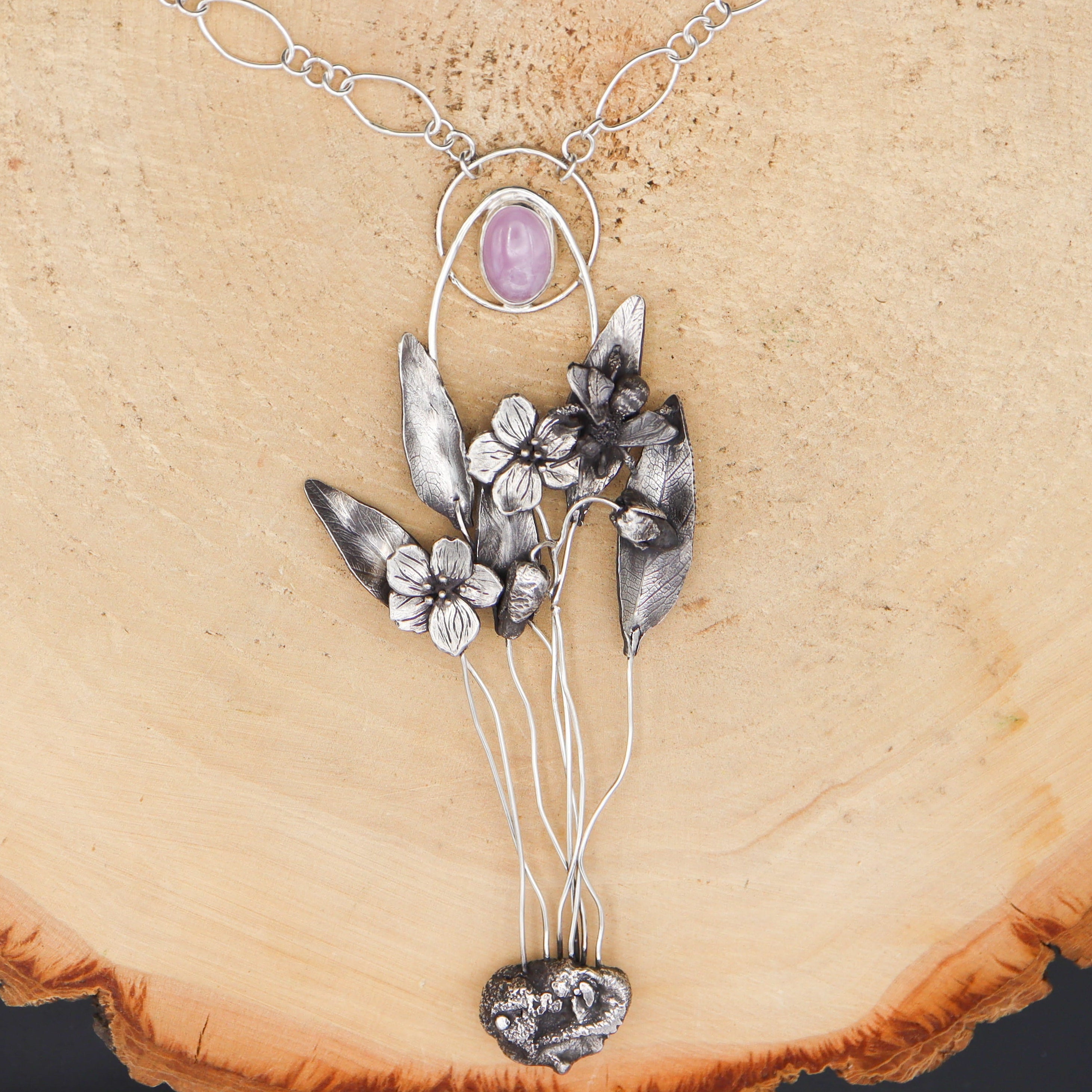
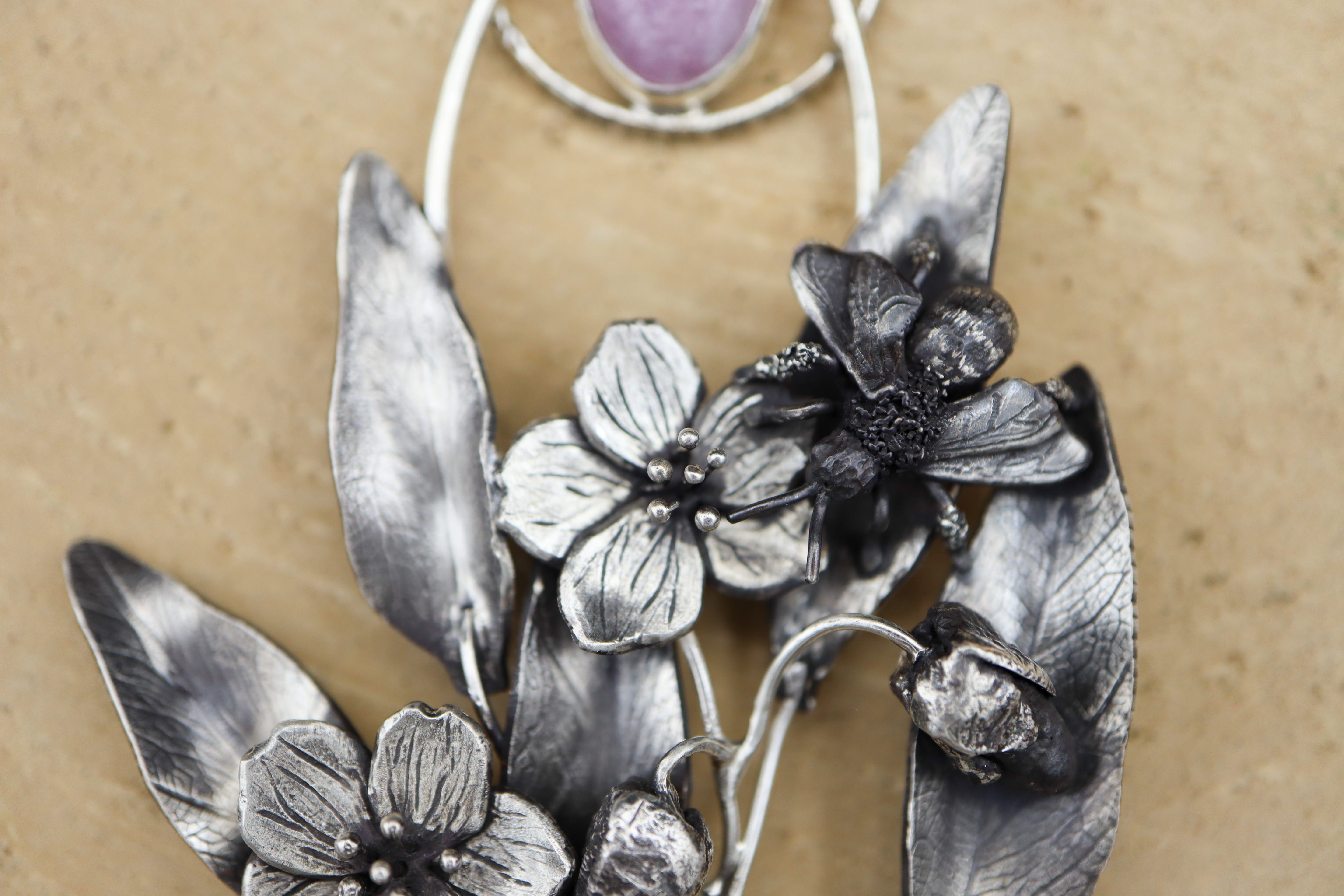
I live in the woods of southern New Hampshire and I think about these things constantly. I make jewelry inspired by the creatures and plants of the northeastern landscape, the ones that evolved here, the ones that belong here, the ones that are quietly disappearing while we admire the ones that do not.
The sundial lupine has not made it into my studio yet. But it is on my list. So is the Karner blue butterfly, which is so small it fits on your thumbnail and so blue it looks like a piece of summer sky that fell off and decided to become an insect instead. Please help me to help them! Talk about this!
Karner blue butterfly female, Dawn Marsh/USFWS, Public Domain, https://www.fws.gov/media/karner-blue-butterfly-female





Leave a comment
This site is protected by hCaptcha and the hCaptcha Privacy Policy and Terms of Service apply.