
Why You Should Stop Raking Your Leaves (It's About the Fireflies)
It is early June in southern New Hampshire and the evenings are just beginning to hold that particular kind of warm darkness that means one thing: fireflies are coming. I have been thinking about fireflies a lot lately. Partly because I make one, and I want to tell you about her. But mostly because the more I learn about fireflies, the more extraordinary they become, and I cannot keep all of this to myself. So pull up a chair. Let us talk about the light bearers.
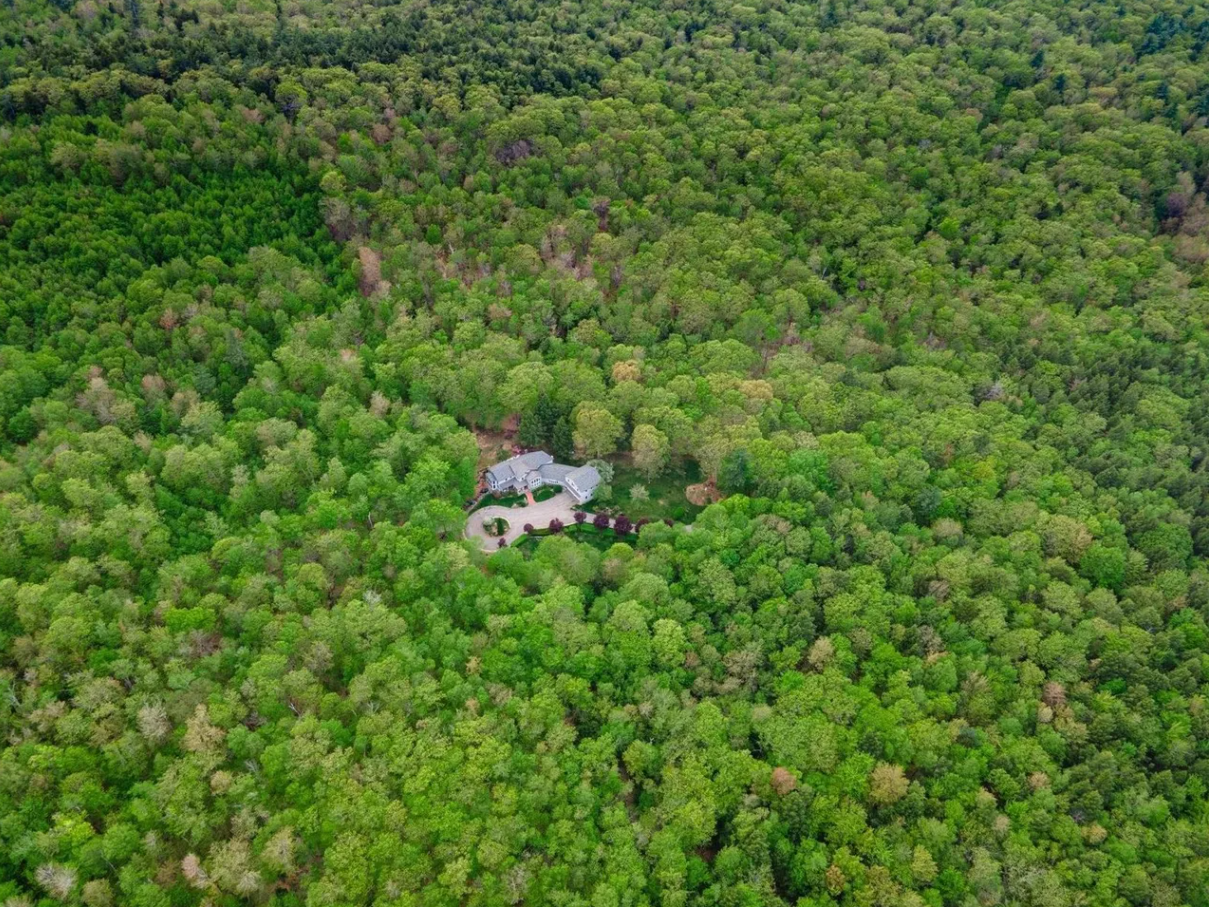
I am also, as it happens, in the middle of converting one of the grassy areas on the side of our house from a mowed lawn into a meadow. Josh is going to hate this, but I talked him into at least only mowing half of that area last night. I am working him down! I am trying to show him that mowed lawns are ecological deserts that give nothing back to the creatures around them. I want fireflies to come to our property and be safe. I want to watch them rise from the long grass on warm evenings and I want to know that the habitat under that grass is alive and waiting for the next generation of light bearers.
This newsletter is dedicated to them. The ones that are already out there somewhere, and the ones that are not here yet.
They Are Not Flies. They Are Not Even Bugs.
Fireflies are beetles. Specifically they are members of the family Lampyridae, a name that comes from the Greek word for torch. Pretty neat! They belong to the same magnificent order as ladybugs and longhorn beetles and the iridescent ground beetles you find under logs in the forest. There are more than 2,000 species of firefly in the world, each one with its own unique flash pattern, its own timing, its own particular language in light.
When you see fireflies in your yard on a warm June evening, you are watching beetles having a very specific conversation.
The Chemistry of Cold Light
Here is what I find coolest about firefly bioluminescence. The light they produce is cold.
A regular light bulb converts only about 10% of its energy into actual light. The rest becomes heat. A firefly converts nearly 100% of its energy into light with almost no heat produced at all. Scientists call this cold light and have spent decades trying to understand exactly how it works.
Inside a firefly's abdomen are two chemicals with wonderful names: luciferin and luciferase. Luciferin comes from the Latin word lucifer, meaning light bearer. When luciferin and luciferase combine with oxygen and the molecule that powers all living cells, a chemical reaction occurs that releases energy as pure light. No heat. No wasted energy. Just light, perfectly and efficiently made.
Engineers and scientists study firefly bioluminescence constantly, trying to understand how to replicate this extraordinary efficiency. We have not managed it yet. The firefly figured it out 100 million years ago.
A Life Spent Mostly in the Dark
Adult fireflies live for only a few weeks. You might assume, given how iconic they are, that they are out there flashing through the summer nights for most of their lives. They are not.
The adult firefly is a brief and glorious finale. The real story happens underground, in the leaf litter, in the dark moist places of the forest floor, where the firefly spends most of its life as a larva.
Firefly larvae can live for one to three years, depending on the species. In the cold winters of New England they overwinter beneath the fallen leaves, tucked into the soil, waiting through the frozen months in a state of dormancy. In spring they emerge and resume feeding, preparing for the transformation ahead.
Firefly larvae are predators. Tiny, glowing, efficient predators. They hunt snails, slugs, earthworms, and soft bodied insects in the dark of the soil, injecting paralyzing neurotoxins with their mandibles before consuming their prey. They are fierce little creatures and they glow while they do it. All known firefly larvae produce bioluminescence, even before they have wings. Even before they are anything we would recognize as a firefly.
The glow is theirs from the very beginning.
Leave the Leaves
Fireflies are declining. Light pollution disrupts their mating flash patterns. Pesticides affect the prey they depend on as larvae. Habitat loss removes the wet meadows, forest edges, and marshy areas they need to survive. And one of the most significant and least talked about threats is something millions of people do every autumn without thinking twice.
Raking and blowing leaves.
Firefly larvae spend years buried in leaf litter. The fallen leaves of autumn keep them warm, protect them from predators, maintain the moisture they need to survive, and provide the habitat for the snails and worms they eat. When we rake our leaves into bags and haul them away, we are removing the infrastructure that firefly larvae need to exist.
You can help by leaving the leaves. Not every leaf, not every corner of your yard. But if you have a garden bed, a quiet corner, a patch under your trees, let the leaves stay. Let the leaf litter build up. Let the forest floor do what it is supposed to do. The fireflies that light up your summer evenings started their lives in those leaves, and the next generation needs them too.
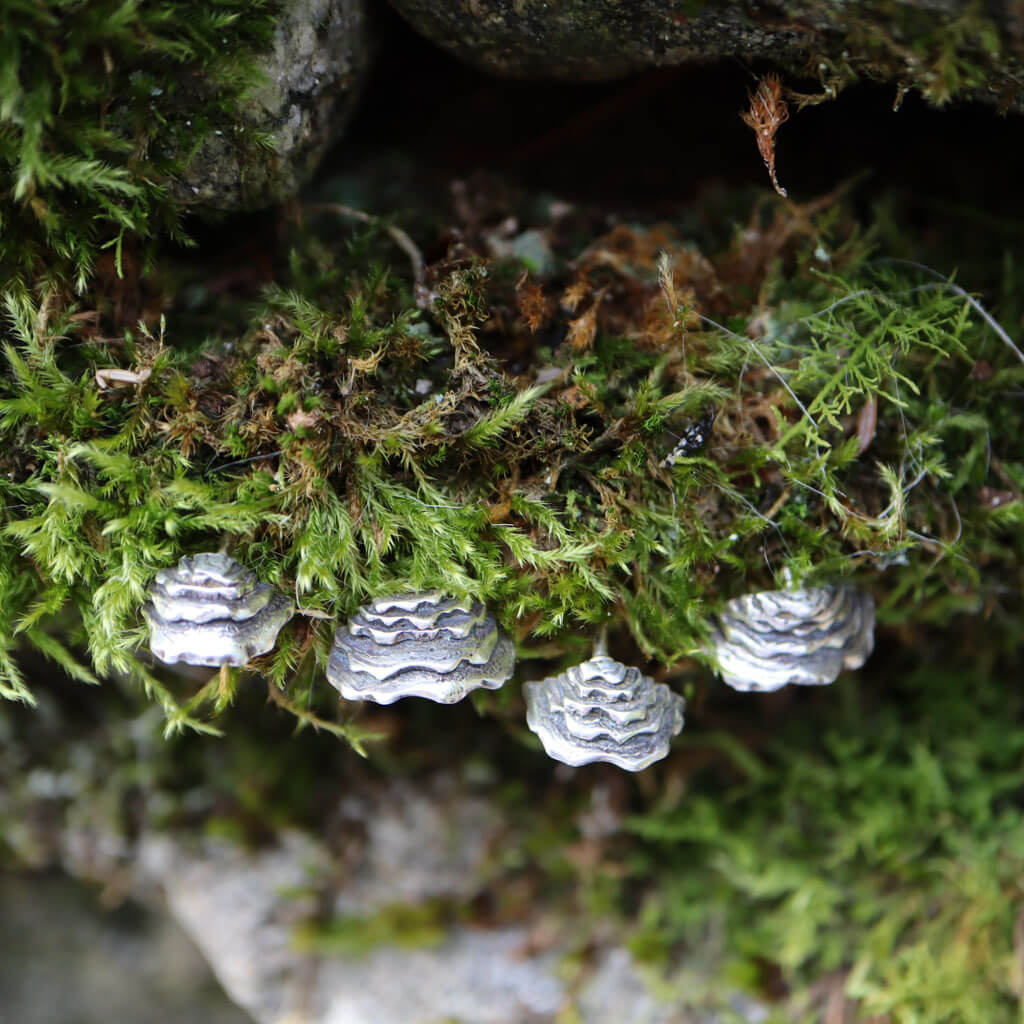
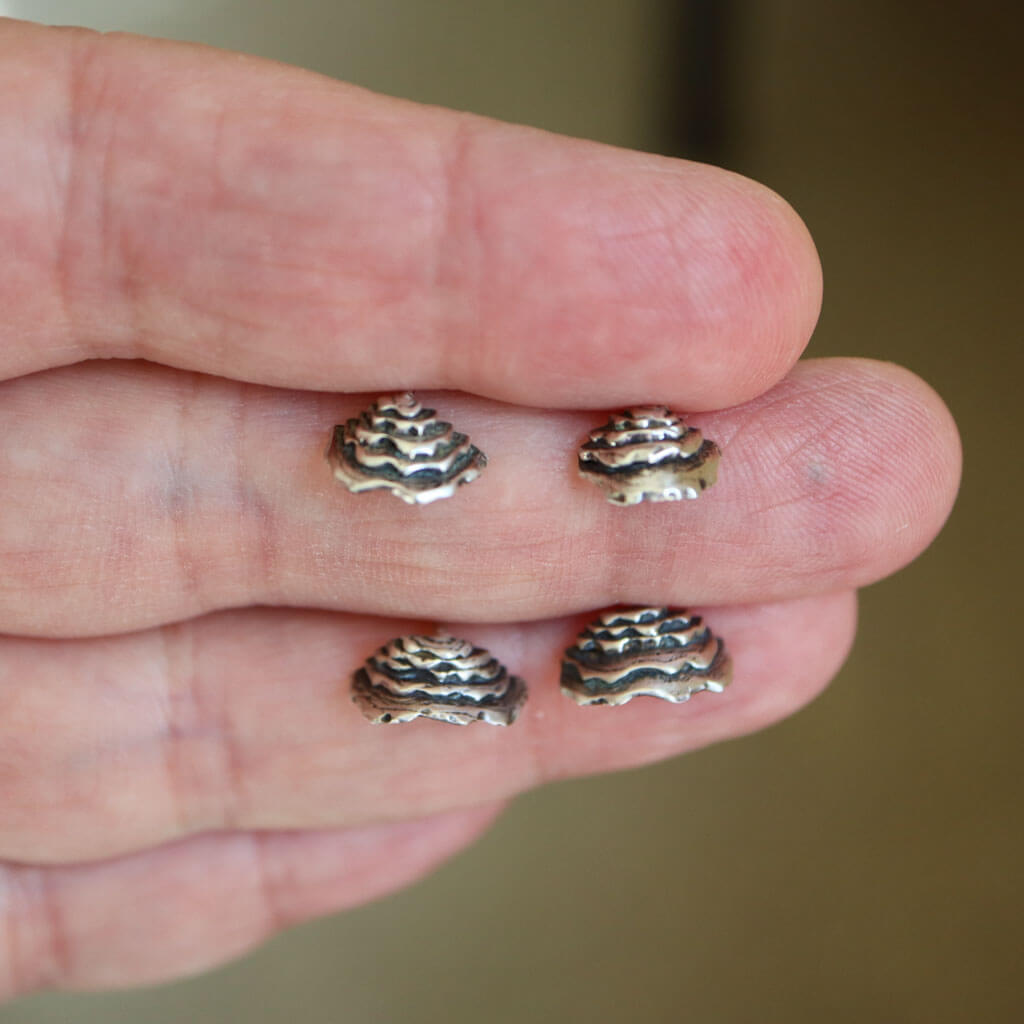
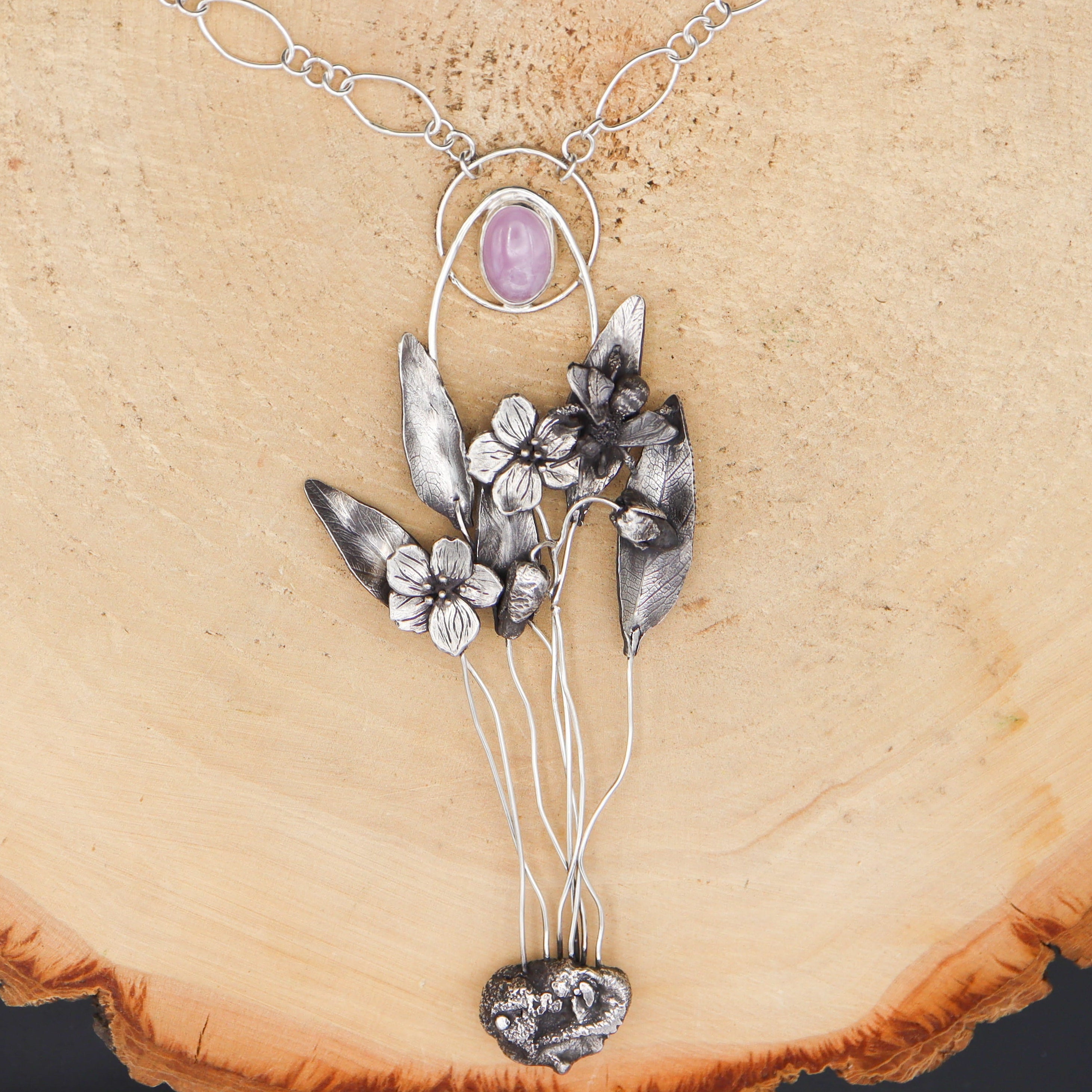
And if you want to go a step further? Plant some borage. (I had to tie these pretty earrings in somehow. Ha! But, seriously, plant mostly native with nectar and pollen.)
Adult fireflies are mostly carnivorous, hunting by night the way their larvae did underground. But they do occasionally sip nectar and eat pollen, and borage is one of the flowers they visit to do it. Borage is a remarkable plant. It replenishes its nectar every few minutes and is beloved by bumblebees, mason bees, and hoverflies. If fireflies pass through your garden on a summer evening, the borage will be ready for them.
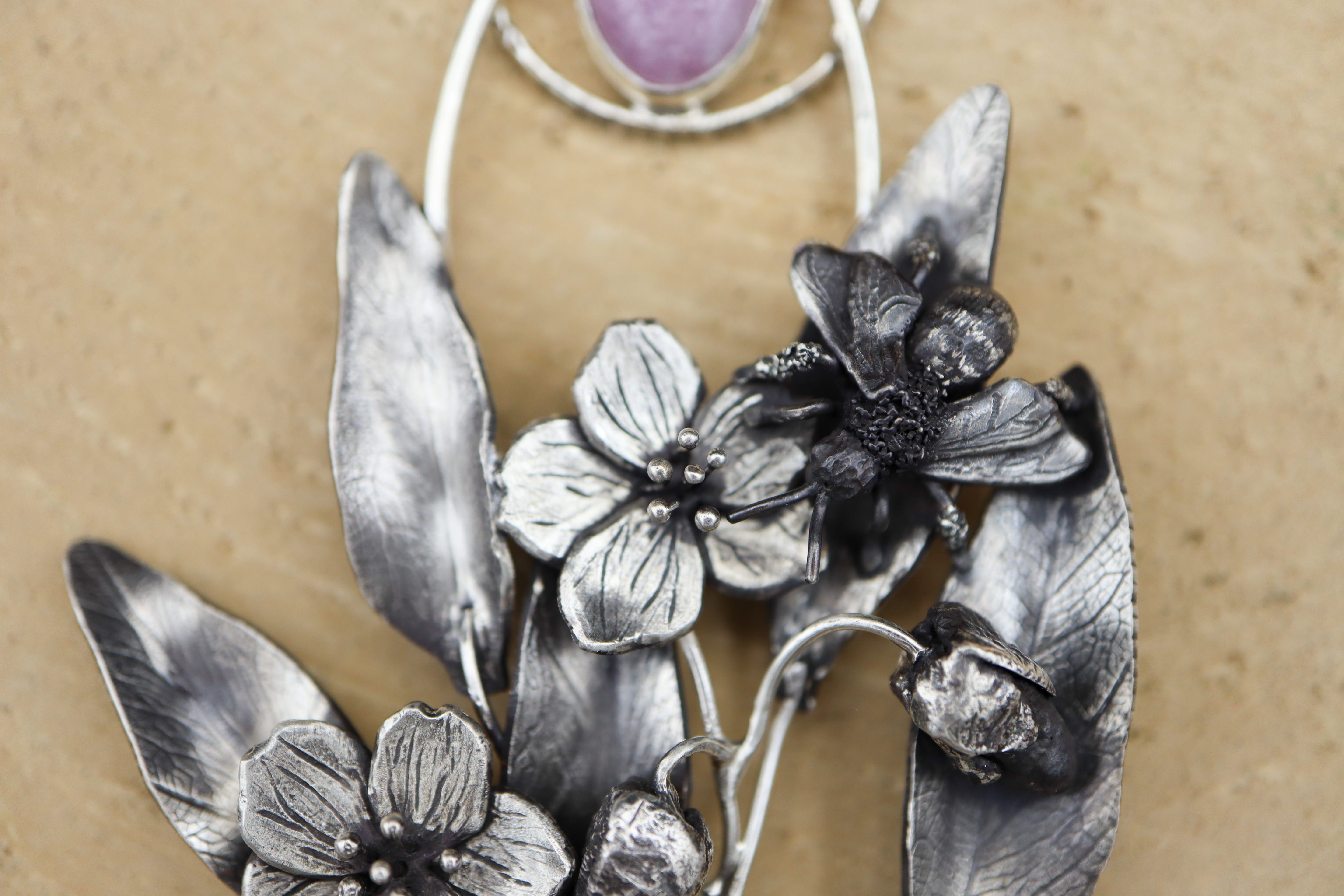
I made a pair of earrings for borage earlier this year, because I could not stop thinking about it. I photographed them alongside a real borage bloom and felt very pleased with how the whole thing came together.
Shop the Borage Flower and Leaf Earrings.

She Glows in the Dark
Her name is Lucia. It comes from the Latin word lux, meaning light, the same root as luciferin, the chemical that lights up every firefly on a summer evening.
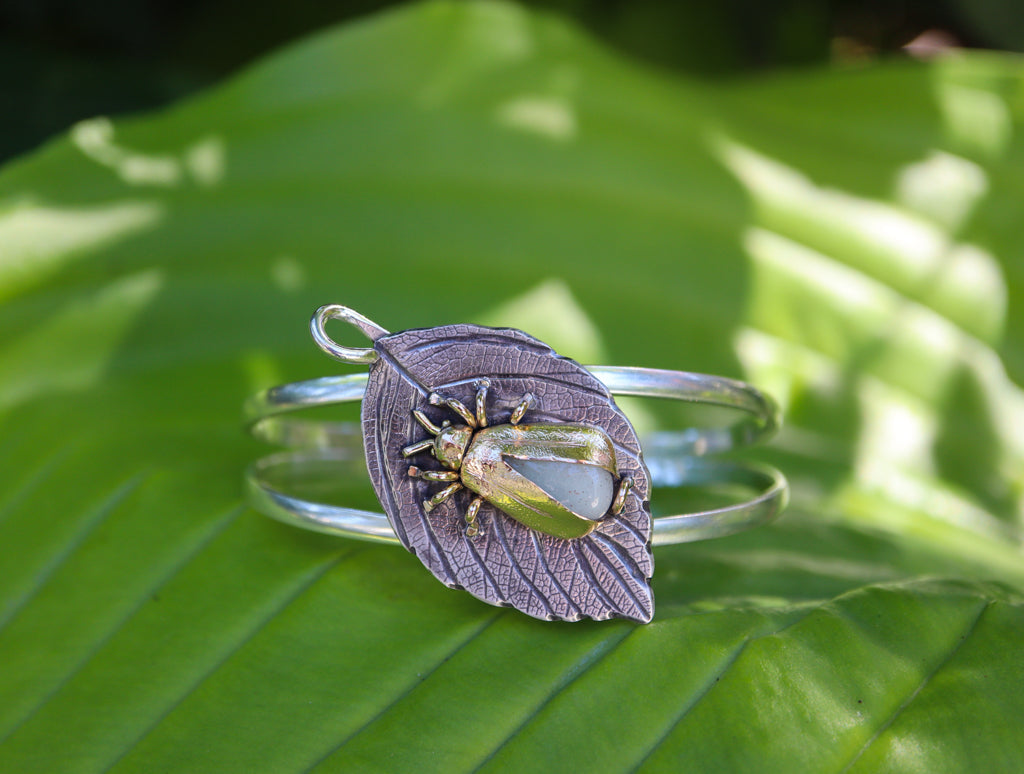
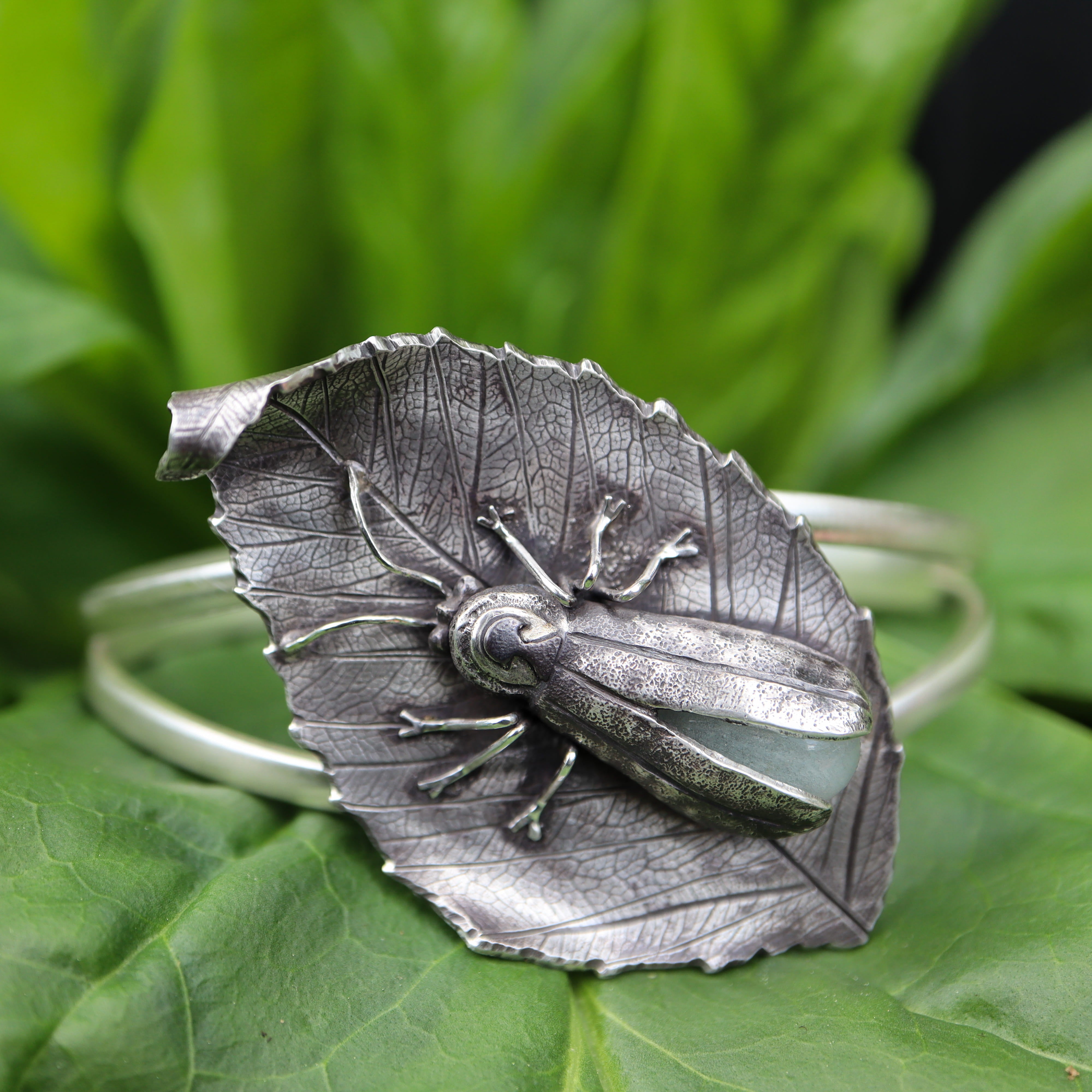
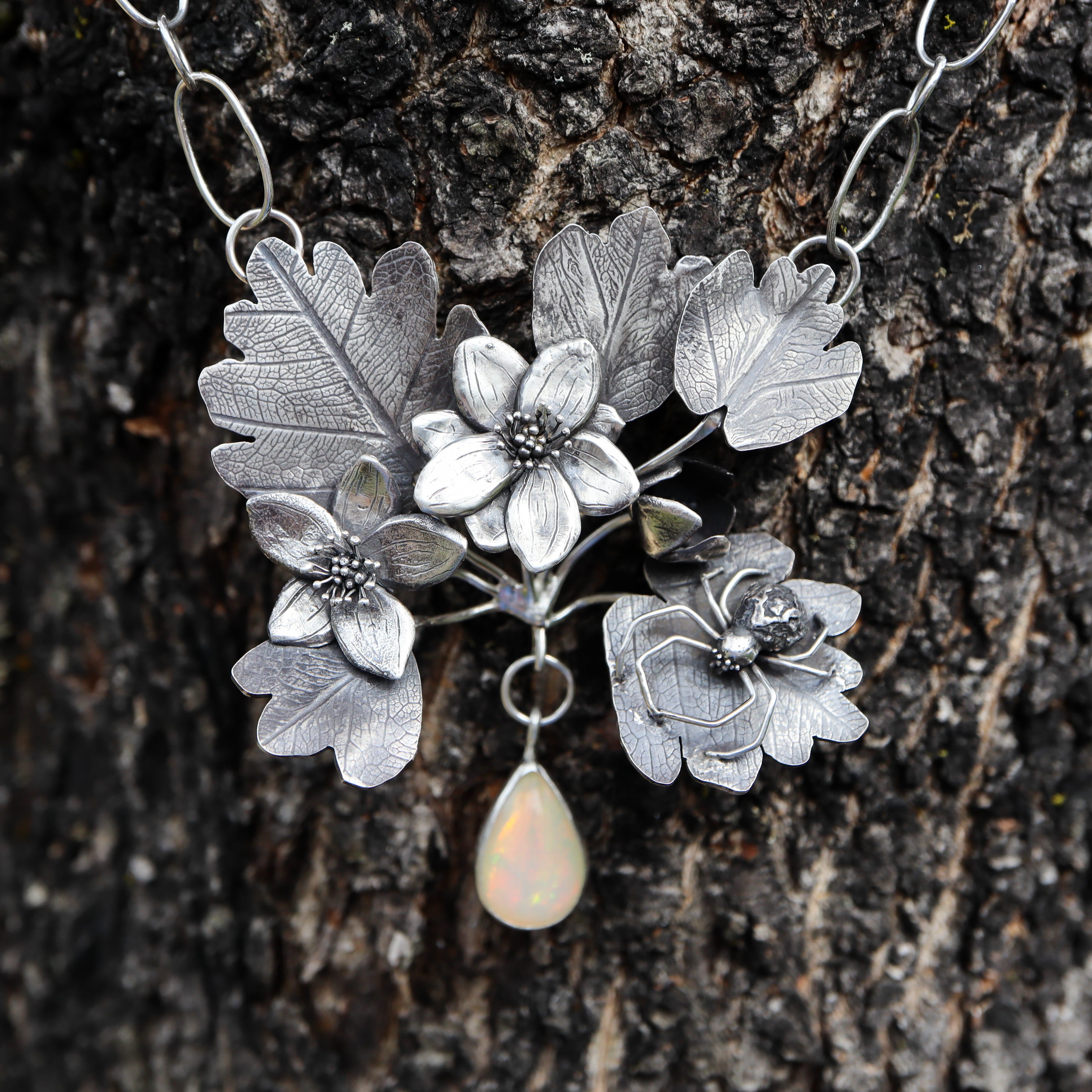
I have been making Lucia for a little while now and she is one of the pieces I am most proud of. Because how cool is this?? She rests on a sterling silver leaf that was made by rolling a real leaf onto it with high pressure, every vein cataloged. Her body is made in 14k gold shaped by my hands and tools. And her abdomen, the part that glows, is a piece of borosilicate glass that I melt and shape by hand in my torch flame for each Lucia I make.
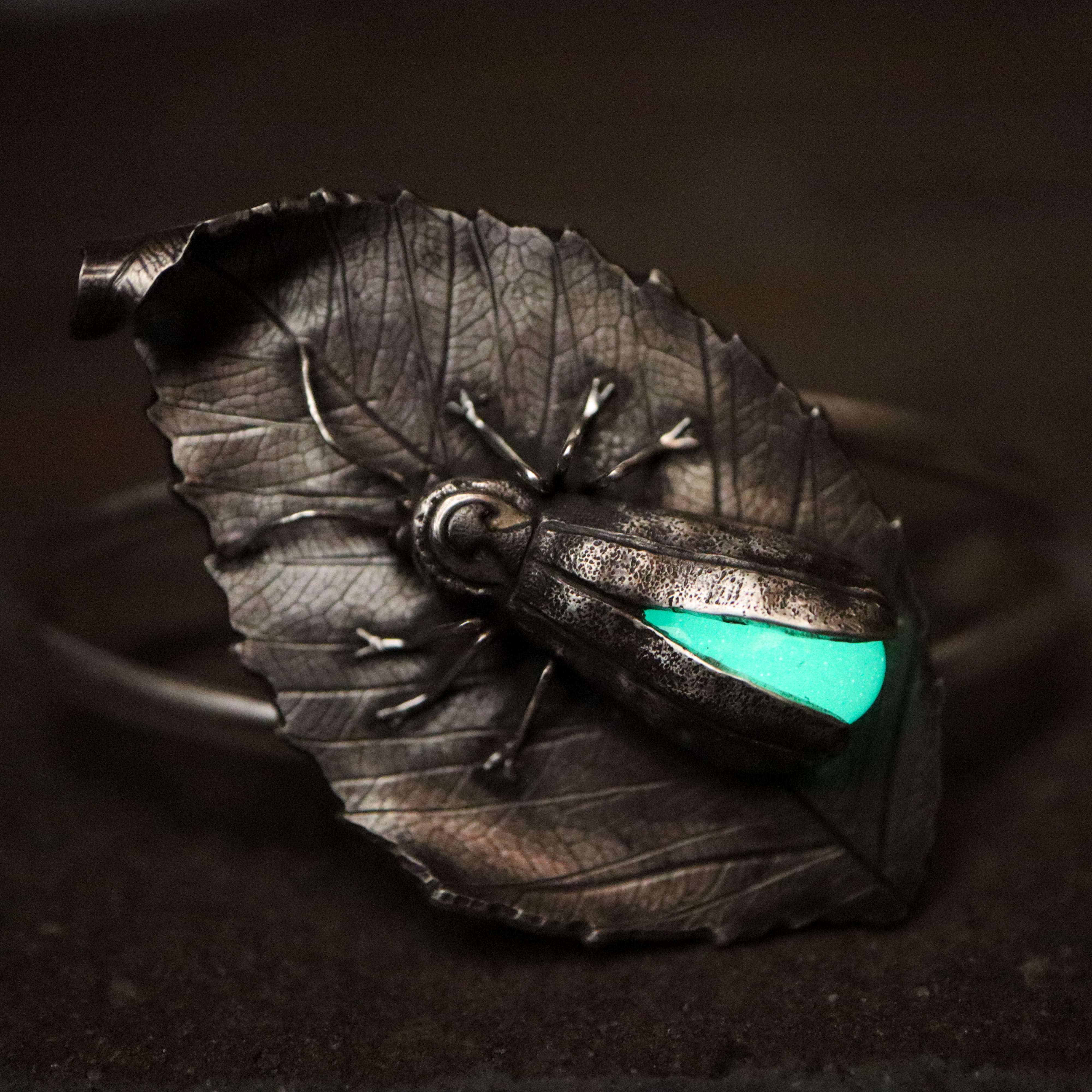
She genuinely glows in the dark and will forever.
Give her a few moments in sunlight or under a lamp and she will hold that light and release it slowly in the dark. No batteries. No charging port. No technology more complicated than light and glass and chemistry that has existed since long before any of us were here. She just needs a little light to remind her what she is capable of, and then she will do the rest herself.
Lucia is available as both a necklace and a bracelet, and both are available to order right now. She is a pre-order, which means I will make yours especially for you after you order. Each one is slightly different because each piece of glass I melt is its own thing, but they all glow, and they all rest on their leaf, and they are all one of a kind.
Once firefly season begins here in New Hampshire I will be watching for them in the (half, Josh?) meadow beside the house. I will think about every one of them spending years in the leaf litter, waiting for this moment, and I will feel the particular kind of wonder that comes from knowing how extraordinary the ordinary actually is.
That is why I make what I make. And Lucia is a piece that says it most clearly.

I write about the natural world and the jewelry it inspires in my newsletter, The Rambling Naturalist. If you love nature stories like this one, you are welcome to join us.





Leave a comment
This site is protected by hCaptcha and the hCaptcha Privacy Policy and Terms of Service apply.