
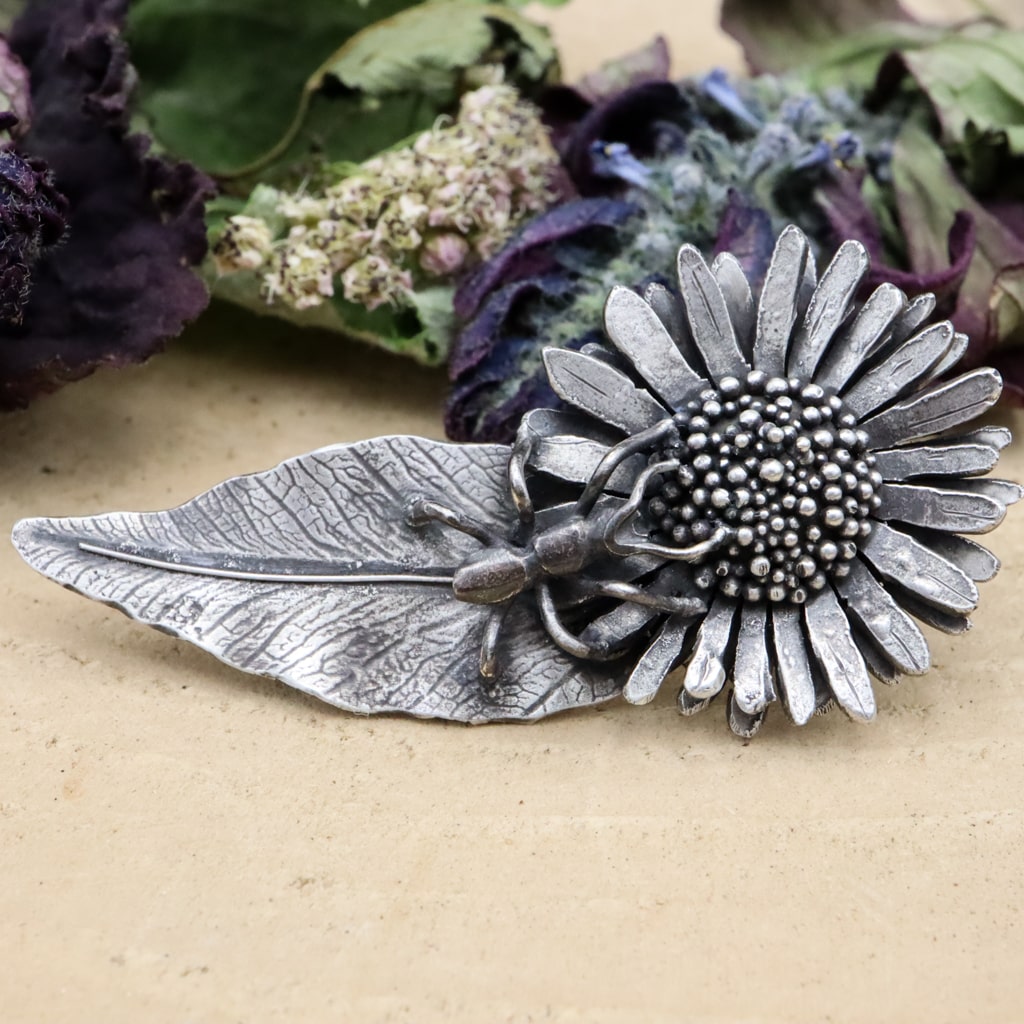
Ada Ant on her Aster Flower Brooch
She has been on this flower for twenty minutes and she is not done yet. She came for the nectar, which the aster offered specifically for her at a small gland near the base of the stem, a little sweetness left out like a gift for a good neighbor. She did not come intending to pollinate anything. She is simply doing her rounds, moving from disc floret to disc floret with the focused efficiency of someone who has a great deal to accomplish before the end of the day. The aster does not mind her intentions. The aster only cares about the pollen she is carrying.
The Ant
Most people think of bees and butterflies when they think of pollinators, and those creatures deserve every bit of that recognition. But the ant has been quietly doing this work too, largely without credit, for a very long time.
Ants pollinate a range of low-growing plants by moving between flowers in search of nectar, carrying pollen on their bodies as they go. Plants that have evolved specifically to attract ant visitors tend to be small and close to the ground, with open flowers that are easy for a wingless insect to navigate, and they often offer something extra to sweeten the invitation. Many flowering plants have evolved specialized structures called extrafloral nectaries, nectar producing glands located on stems or leaves rather than inside the flower itself, specifically to attract ants. The ant gets a reliable food source. The plant gets a visitor who will patrol its stems and defend it from herbivores while also carrying pollen to its neighbors. Native asters are among the plants that benefit from ant visitors, which is why if you watch a patch of asters long enough in late summer you will almost certainly find an ant working her way methodically across the disc florets, doing ant things, doing essential things, completely unbothered by the significance of what she is carrying.
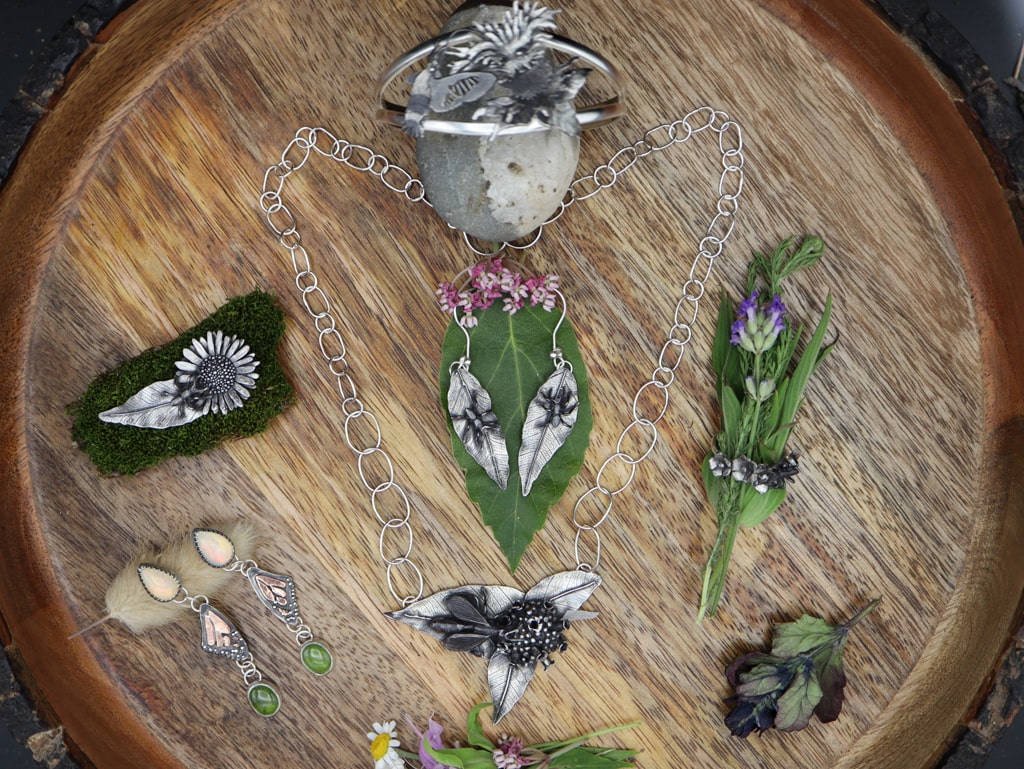
And then there is myrmecochory, the seed planting relationship that Ada and her sisters Amelia, Antoinette, and Aurelia all celebrate in this collection. Ants carry seeds back to their nests to eat the elaiosome, a small fatty nutritious appendage attached to the seed, and then discard the seed itself in their underground compost. The seed germinates in exactly the right spot, already tucked into rich disturbed soil. The ant gets a meal. The plant gets planted. Both benefit. Neither is harmed. Plants that depend on this relationship include trilliums, bloodroot, spring beauty, and violets, and none of them could spread through the forest without the ants who carry them.
The Piece
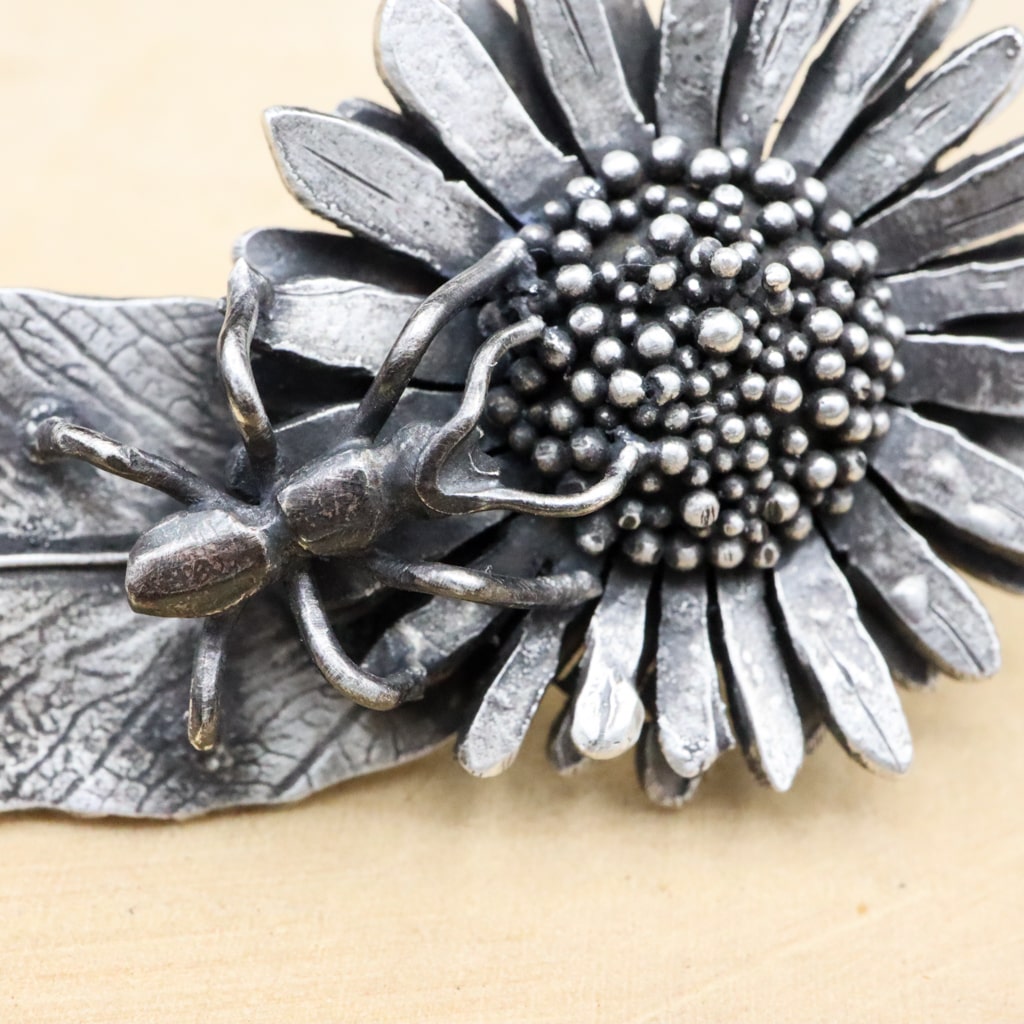
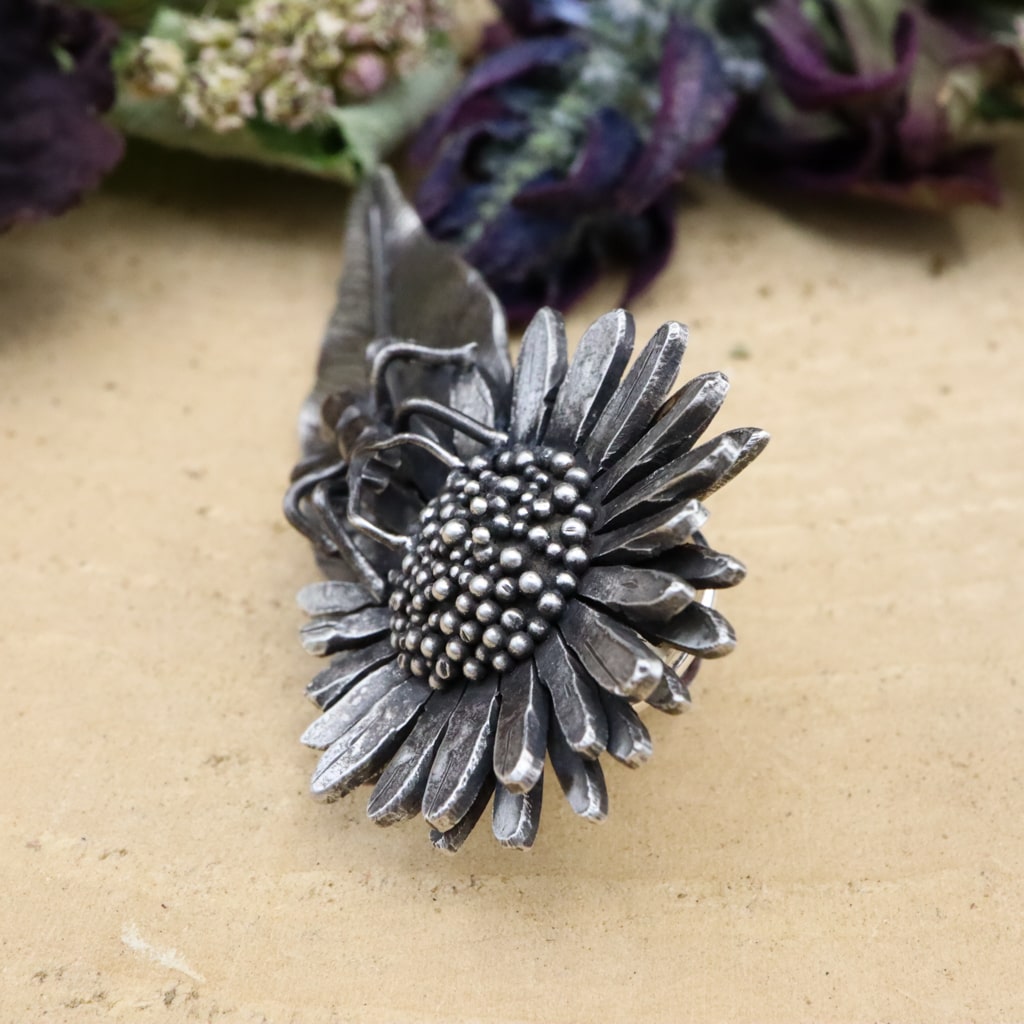
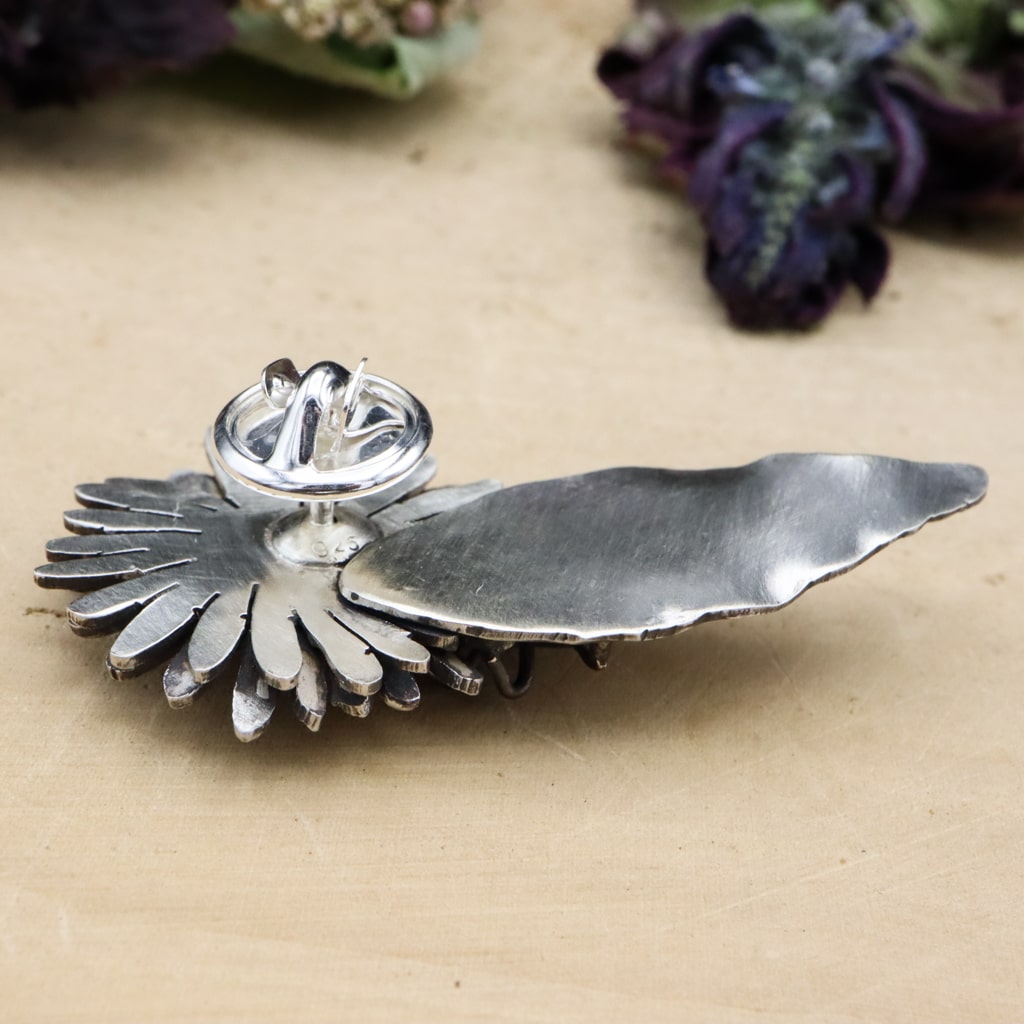
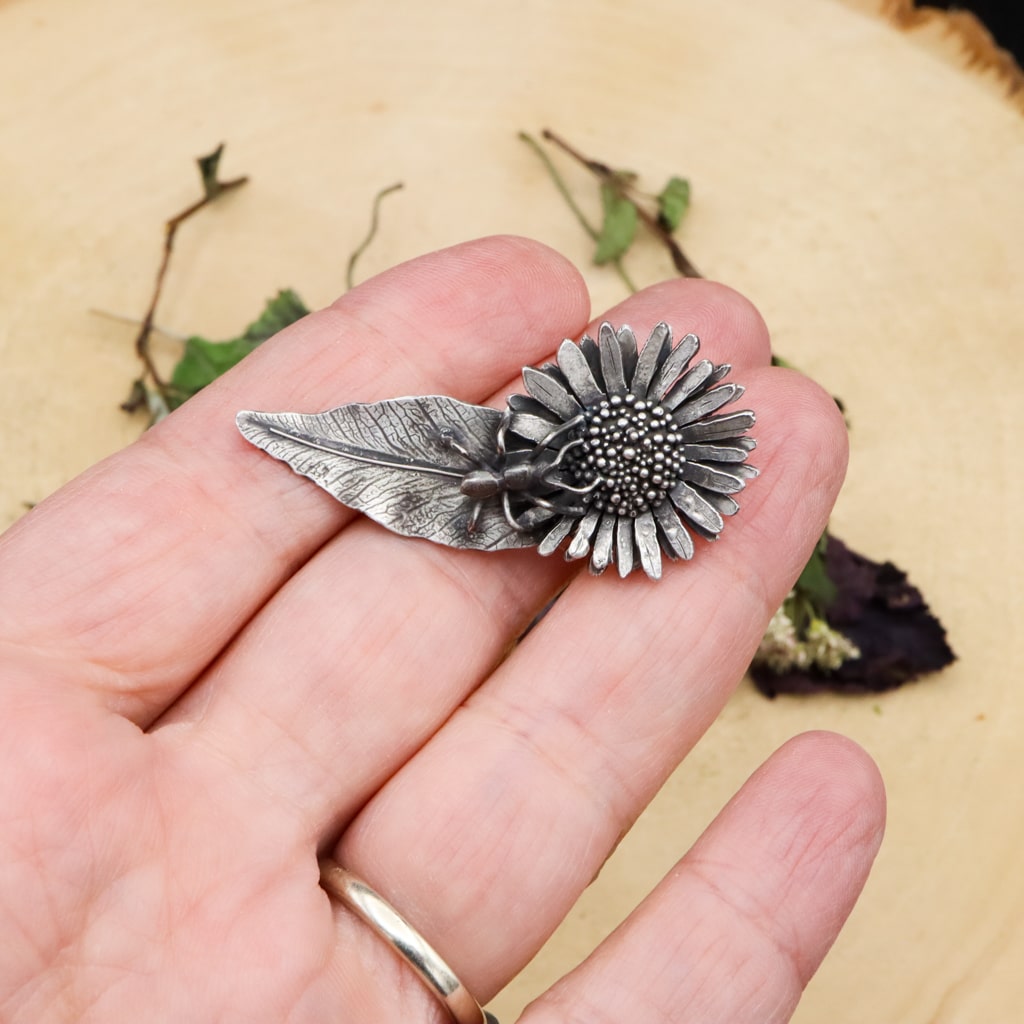
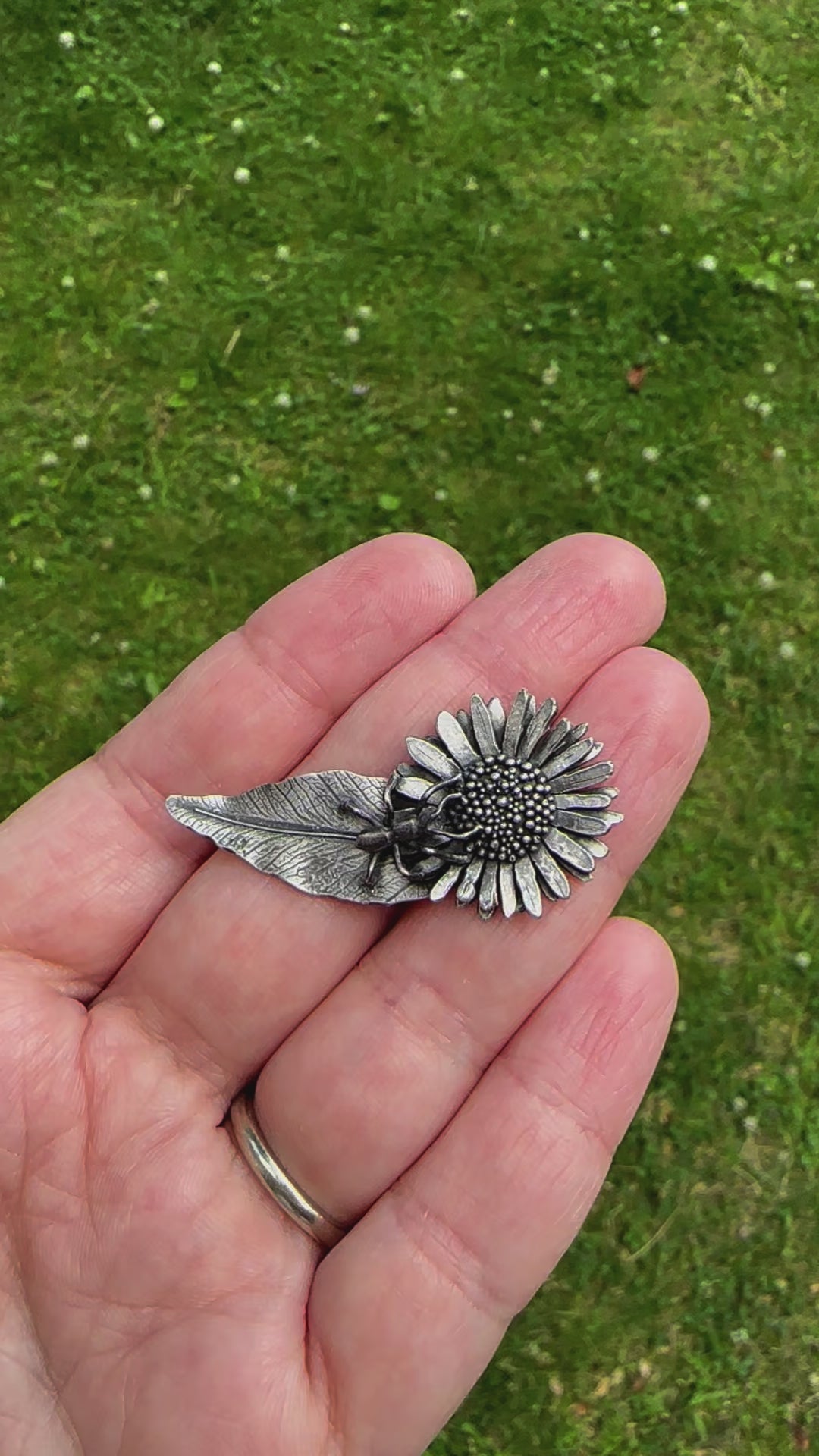
Ada perches at the center of a fully open native aster, her three body segments and six legs rendered in careful detail, antennae lifted as if she has just detected something interesting two flowers over. The aster itself is built up in layers, each ray petal individual, the disc florets at the center formed from tiny granules that give it that characteristic dotted texture of a real aster head in full bloom. Beneath the flower a real leaf was pressed directly into the sterling silver, its veins and edges transferred permanently into the metal, so the impression on the back of the piece is as much a nature print as it is a brooch. The pin and its hardware on the reverse are also sterling silver throughout.
Ada is approximately 2 inches long and 1 inch tall.
The Craftsmanship
- Brooch: approximately 2 inches long by 1 inch tall
- Material: sterling silver throughout, oxidized
- Detail: real leaf impression on reverse
- Closure: sterling silver pin back
- Edition: one of a kind
One of a Kind
There is only one Ada. This aster, this leaf, this particular ant pausing mid-errand on this particular flower: they exist once. When Ada finds her person she will never be made again exactly like this.
A Note from Tamara
I have been photographing ants on my native asters for years and I still find it delightful every time. There is something about the combination of the two, the tiny ant and the big cheerful flower, that makes me want to stop whatever I am doing and watch. Ada is the fourth ant in this collection and she carries the same essential work as her sisters, the pollinating, the seed planting, the quiet daily labor that holds the whole forest together. I made her as a brooch because I wanted her to be the kind of piece you pin to a coat or a bag and wear into the world like a small declaration of what you care about. Nature is doing extraordinary things right at our feet. Ada knows this better than anyone.
Shipping
Your Ada is finished, packaged safely, and will be on her way to you within 3 to 5 business days.

Choose options