

Carnivorous Bog Necklace
There is a fly above the venus fly trap right now and things could go either way. The trap is open and waiting with the particular patience of something that has been doing this for a very long time and has learned that patience is the whole strategy. The pitcher plants are blooming nearby, their flowers held high above the traps on separate stalks so that the pollinators they need do not accidentally become the meal they also need. The sundew on the log is covered in glittering sticky droplets that catch the light like dew and function nothing like dew. Everything here is beautiful. Everything here is hungry. Welcome to the bog.
The Carnivorous Plants
Bogs are some of the most inhospitable environments a plant can try to grow in. The water is cold and acidic and almost completely lacking in the nitrogen and phosphorus that most plants depend on for survival. The sphagnum moss that forms the substrate absorbs nutrients from the water before roots can reach them. The soil, such as it is, offers almost nothing. Most plants cannot survive here at all.
Carnivorous plants evolved a different strategy. If the soil will not provide nutrients, find another source. And so the pitcher plant lures insects with bright venation patterns and fragrant nectar, draws them into a tube lined with downward-facing hairs, and lets them drown in the liquid pooled at the bottom where enzymes break them down into usable nutrition. The sundew extends tiny hair-tipped with sticky droplets that glitter in the light exactly like morning dew, and when an insect lands on them it finds itself held fast while the leaf curls slowly around it. And the venus fly trap, which Charles Darwin himself called one of the most wonderful plants in the world, waits with its trap open until two of its six trigger hairs are touched in quick succession, then snaps shut in half a second, the fastest movement in the plant kingdom. It digests its prey over about ten days and then opens again. Each trap can only do this three or four times before it dies. Every closure costs something.
These three plants grow together in New England bogs, each one a completely different solution to the same impossible problem, collectively making the nutrient-poor bog one of the most ecologically extraordinary habitats in the region.
The Piece
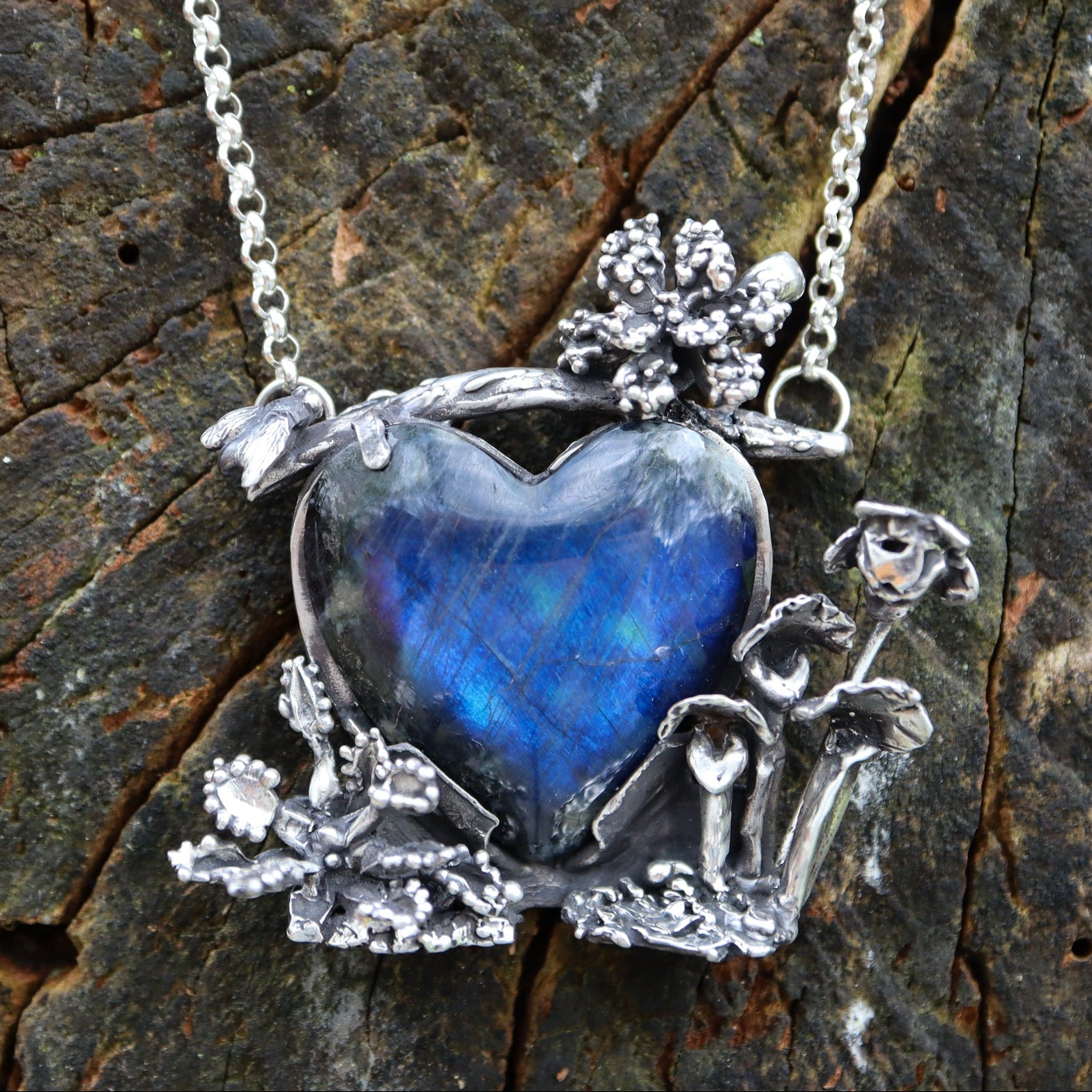
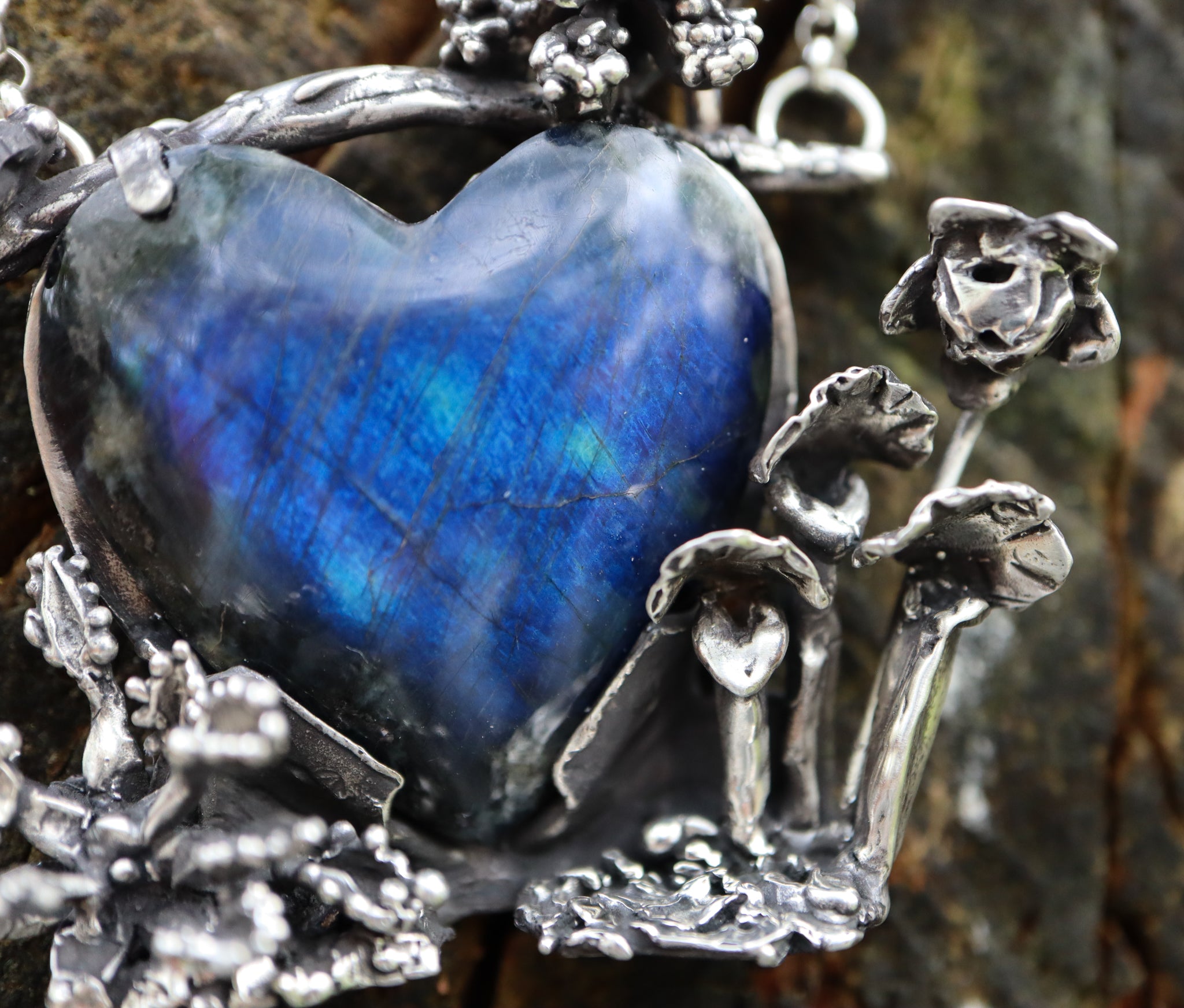
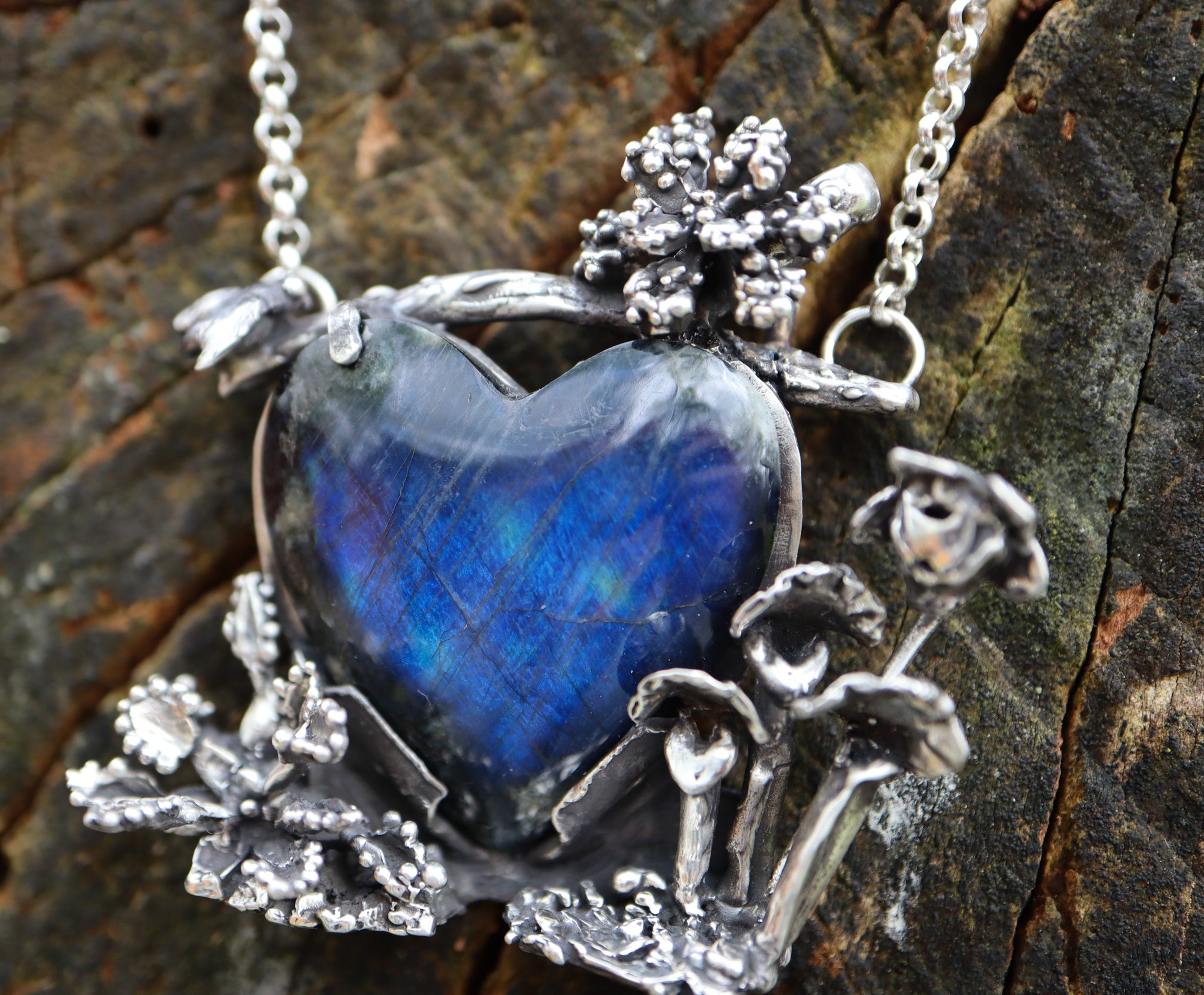
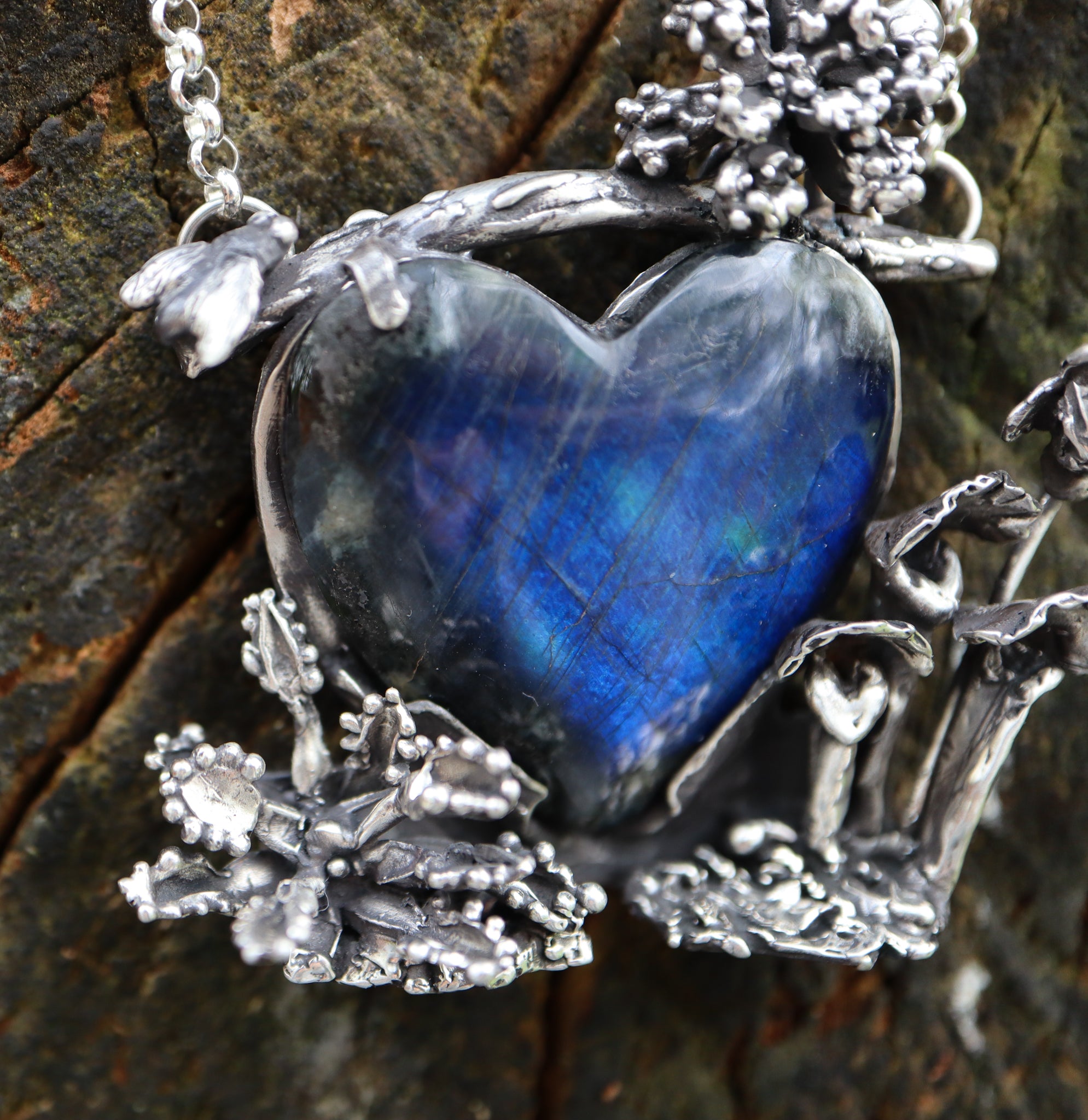
At the center of this pendant a spectrolite heart pulses with deep blue labradorescence, that extraordinary optical phenomenon where layers of feldspar mineral scatter light into vivid blue and green and teal that appears and disappears as you move. Spectrolite is the finest grade of labradorite, found primarily in Finland, and the flash in this particular heart is extraordinary, vivid and saturated and different every time the light finds it at a new angle.
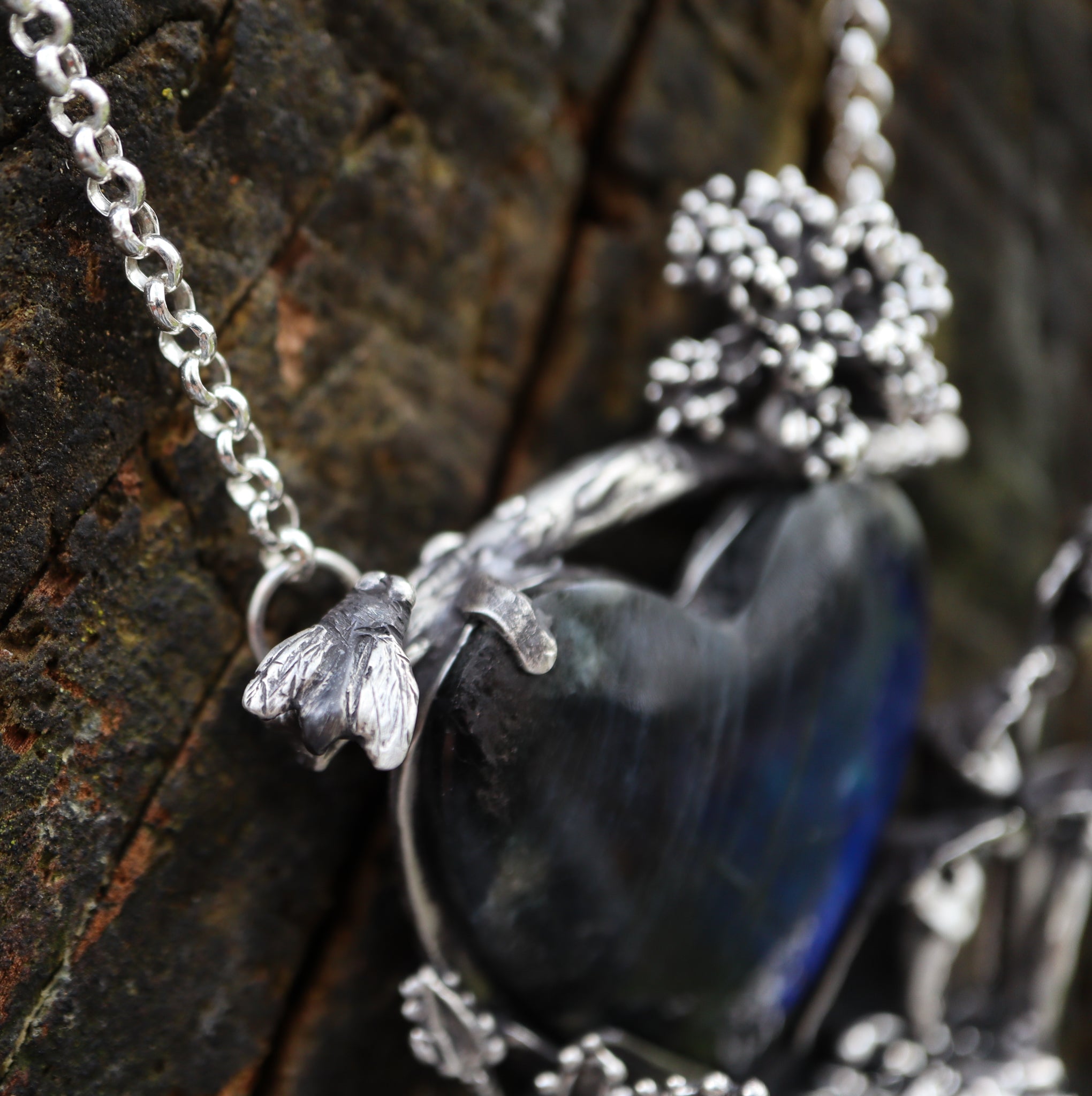
Around the heart the bog comes alive. Pitcher plants grow from the sphagnum and peat substrate below, their tubular traps rendered in careful detail, their flowers blooming above on separate stems exactly as real pitcher plants bloom, keeping their pollinators safely away from the traps below. The venus fly trap sits open and waiting, its toothed lobes spread wide, watching. The sundew grows from a log that forms part of the frame, its sticky-tipped hairs visible at this scale. And above the whole scene, perched at the top of the composition, a tiny fly has arrived at exactly the wrong moment and has not yet realized it.
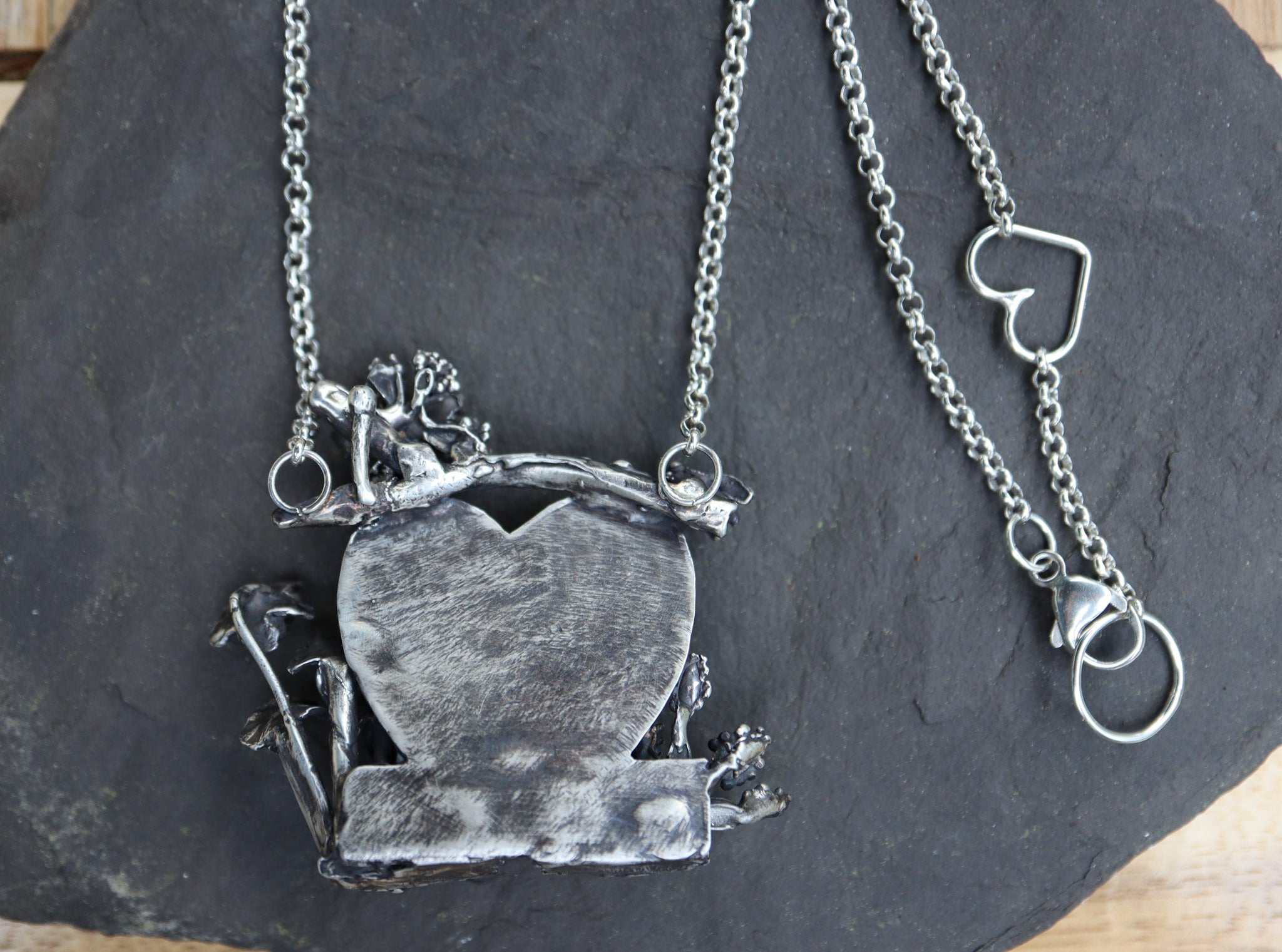
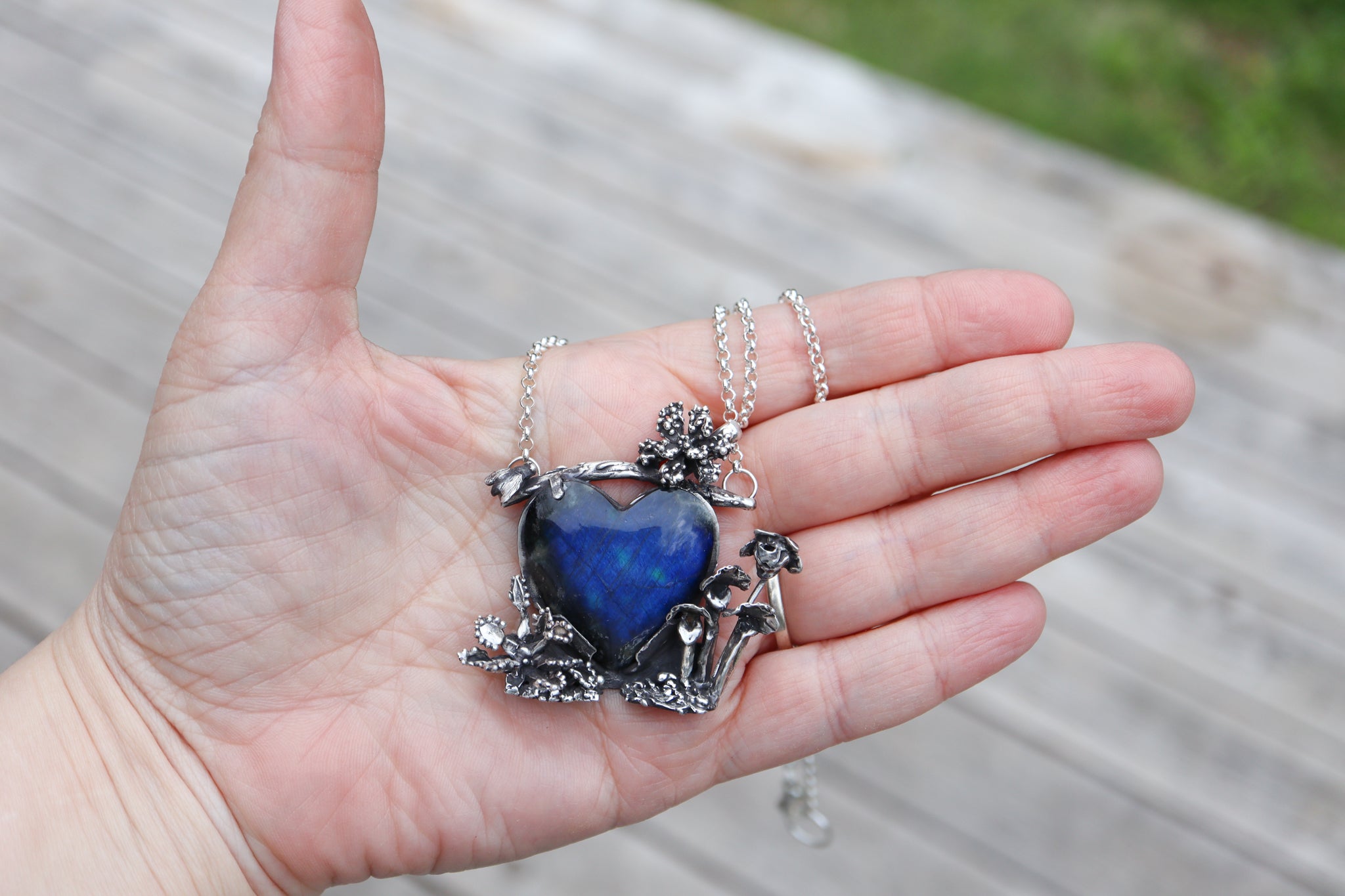
The pendant measures 2 inches tall and just over 2 inches wide, on a 21 inch sterling silver chain with an added heart detail that allows you to shorten it to 19 inches if you prefer.
The Craftsmanship
- Pendant: 2 inches tall by just over 2 inches wide
- Stone: spectrolite heart cabochon, deep blue labradorescence
- Material: sterling silver throughout, oxidized
- Chain: 21 inch sterling silver chain, adjustable to 19 inches via heart detail
- Edition: one of a kind
One of a Kind
There is only one of this necklace in the world. This bog, this spectrolite heart, this particular fly making this particular decision at the top of the frame: they exist once. When it finds its person it will never be made again exactly like this.
A Note from Tamara
I have loved carnivorous plants since I was a child and I think most people who love nature do, because there is something about a plant that decided to eat insects that feels like the natural world at its most inventive and most honest. The bog is a whole ecosystem built around the premise that beauty and danger are not opposites. The pitcher plant is gorgeous. The sundew sparkles. The venus fly trap is, as Darwin said, one of the most wonderful things in the world. I chose spectrolite for the heart because it does the same thing the bog does, looks like one thing until the light shifts and then reveals something completely different underneath. I hope whoever wears this feels that same wonder every time the stone catches the light and shows them something new.
Shipping
Your necklace is finished, packaged safely, and will be on its way to you within 3 to 5 business days.

Choose options