

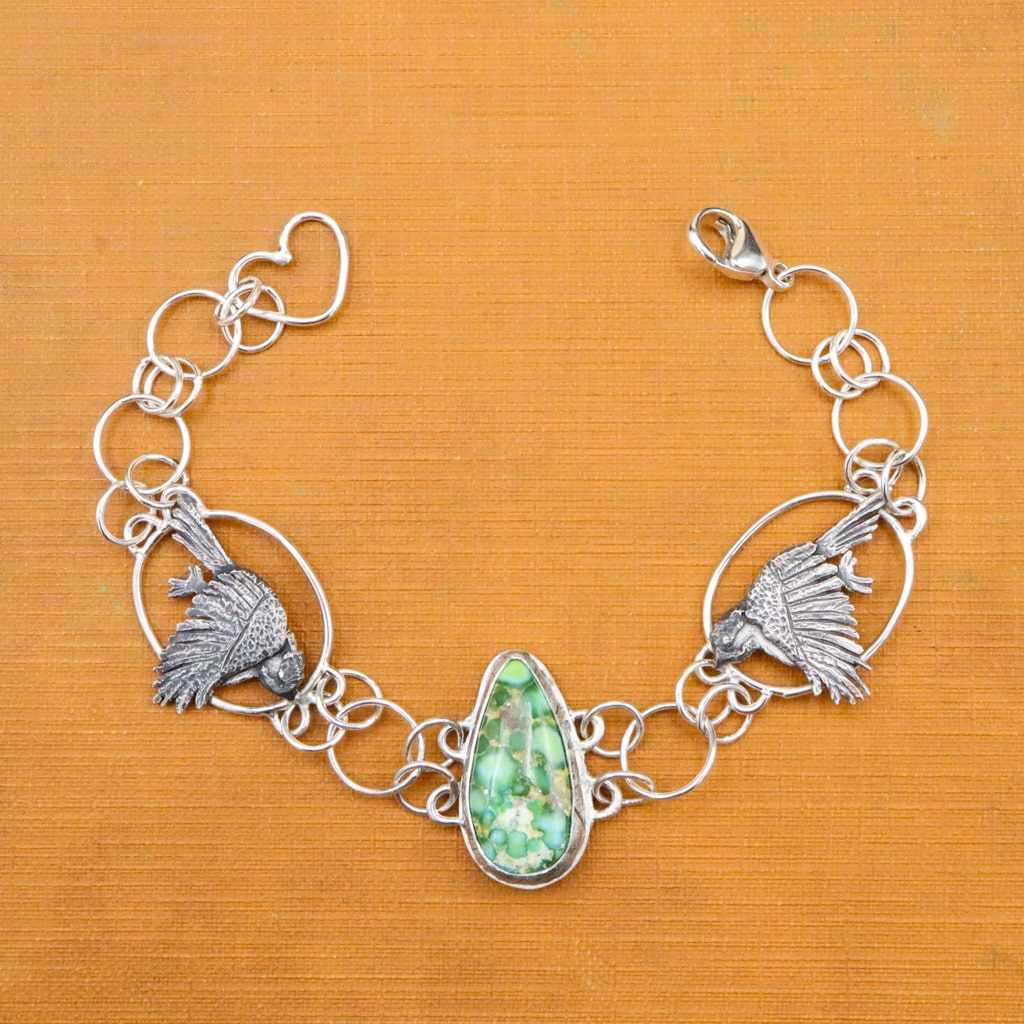
What It Actually Takes to Raise a Chickadee (And the Books That Changed How I Garden)
 I have been thinking about chickadees.
The reason chickadees have been on my mind has everything to do with a book.
The Number That Changed Everything
Years ago I read Doug Tallamy's Bringing Nature Home, the book that is widely credited with starting the native plant movement, and one fact in it changed how I think about every plant I put in the ground. Both chickadee parents bring a caterpillar to the nest once every three minutes, from six in the morning until eight at night, for sixteen to eighteen days until the chicks fledge. That is 350 to 570 caterpillars every single day. To raise one clutch of chickadees it takes between 6,000 and 9,000 caterpillars.
Not seeds. Not berries. Soft bodied insects and spiders, with caterpillars making up the majority because chickadees raise their chicks at exactly the same time caterpillars are out before cocooning, making them abundant and easy to catch. Spiders are particularly important during the first five days of a chick's life because they contain high levels of taurine, an amino acid essential for brain development and the sharpness of their vision. A plant that hosts no insects hosts no spiders, right? Because what do spiders eat? A yard full of non native ornamentals is, to a chickadee raising a family, almost as if there are no plants there at all.
And when Tallamy compared a native white oak to a Bradford pear of similar size in a neighboring yard, he counted 410 caterpillars of 19 different species on the oak. On the Bradford pear he found exactly one.
One.
Loyalists, Not Generalists
I have never looked at a plant the same way since. When I am choosing something new for the garden now, my first question is not how pretty it blooms. It is how many insects does it host. Those are very different questions and they lead you to very different plants. Most insects are not generalists. They are loyalists, bound by evolution to a single plant family, unable to eat anything else no matter how much of it surrounds them.
What I Am Reading Right Now
I am currently working my way through Tallamy's brand new book, How Can I Help?: Saving Nature with Your Yard, and it is just as good as everything else he has written. One thing that stopped me completely? Just 14% of our native plants are supporting 90% of all the caterpillars. Tallamy calls them keystone plants, the two by fours holding up the ecological house. You have heard me talk about this too much! For most of the northeastern United States, oaks lead that list. A single native oak supports hundreds of species. If you have room for one tree, plant an oak. And if you do not have room for a tree, plant goldenrod. There are so many different types! Also, not the plant that can be blamed on seasonal allergies like they would like us to believe because of the way it's pollen is dispersed. It is the single most valuable flowering plant you can put in the ground, supporting over 100 species of bees, dozens of butterflies and moths, and providing late season pollen and nectar when almost nothing else is blooming. One plant. An enormous difference.
Switch Your Porch Light
Doug also has a tip so simple it surprised me. Switch your outdoor white light bulbs to yellow ones. White light draws insects in and kills them in enormous numbers every single night. Yellow light does not attract them. It is one of the smallest possible changes and one of the most meaningful ones.
This matters more than most people realize because the insects most drawn to white light at night are moths. Moths outnumber butterflies ten to one. There are nearly 14,000 species of moths in North America alone. They pollinate while we sleep, working flowers that close during the day and open only after dark, and their hairy bodies make them more efficient pollinators than butterflies. Their caterpillars are also among the most important food sources for nesting birds. We tend not to think about moths because we are asleep when they are working. But they are out there every night, doing something essential, and our porch lights are killing them by the millions. Please think of them?
The Books on My Nightstand
Two other books that are worth mentioning here as well.
Nancy Lawson's The Humane Gardener changed how I think about every creature that shares my yard, not just the charismatic ones. Nancy has a way of asking you to see the world through the eyes of every living thing in your garden, from the butterflies everyone loves to the moles and beetles and groundhogs that most people want gone. Her message is that a humane garden is not a perfect garden. It is a generous one. If you follow her on social media you will find yourself stopping mid scroll to watch videos of her yard filling up with life, and feeling something that I can only describe as hope. She has a second book called Wildscape that is sitting on my list and moving up quickly.
And The Everyday Naturalist by Rebecca Lexa, a certified master naturalist whose credentials genuinely surprised me when I looked her up, is a beautiful guide to actually seeing what is around you wherever you are. It covers how to identify animals, plants, fungi, lichens, and even slime molds anywhere in the world, not just one region. I found out recently that she follows me on Instagram, which delighted me completely.
One More Thing About Chickadees
Every autumn, as the days shorten and the temperatures drop, the chickadee begins hiding food. Seeds tucked under bark. Insects cached in lichen. A single chickadee can cache up to eighty thousand food items in a season, each one in a different location. And in order to remember all of those hiding spots, the hippocampus, the region of the brain responsible for spatial memory, physically grows by up to thirty percent every autumn. New neurons form. New memory is created. And then in spring, when the world fills back up with food and the caching season ends, the hippocampus shrinks again until next year.
The chickadee grows a bigger brain for winter and then gives it back in spring. It does this every year of its entire life. It is also, somehow, still small enough to fit in the palm of your hand. Come on! How are they not beloved by everyone?






Leave a comment
This site is protected by hCaptcha and the hCaptcha Privacy Policy and Terms of Service apply.