
We Have Ants to Thank for Our Spring Ephemerals
Did you know that the most important gardener in the New England woods weighs less than a paperclip?
Walk into a northeastern hardwood forest in April and you will find something extraordinary happening at your feet. Trilliums pushing up through the leaf litter. Bloodroot unfurling its single wrapped leaf around a solitary white flower. Spring beauties carpeting the ground in pale pink. Trout lilies nodding their spotted heads in the dappled light. A whole world waking up at once, brief and brilliant and gone again before summer even settles in.

You might think the wind planted these flowers. Or the birds. Or simple chance, seeds rolling downhill and finding good ground wherever they landed. But that is not what happened. Most of these flowers were planted by ants. Specifically, by a small and largely overlooked woodland ant called Aphaenogaster, and the spring forest as you know it exists almost entirely because of them.
A Partnership Older Than You Can Imagine
The relationship between Aphaenogaster ants and spring ephemeral wildflowers is called myrmecochory, from the Greek words for ant and disperse, and it is one of the oldest and most essential partnerships in the eastern forest. Here is how it works.
Many spring ephemeral seeds come equipped with a small fatty nutritious appendage called an elaiosome, a tiny packet of lipids and proteins attached directly to the seed coat. The elaiosome is not accidental. It evolved specifically to attract ants. It is the plant's way of saying: here is something delicious, please take it home.

The ant obliges. She picks up the seed, carries it back to her underground nest, and feeds the elaiosome to her larvae. It is a genuinely valuable food source, particularly in early spring when other options are scarce. And then, when she is done with the meal, she does exactly what the plant was counting on. She discards the seed in her colony's waste chamber, a place that is underground, protected from temperature extremes, rich in organic material from the decomposing plant material the colony has been gathering, and in exactly the right conditions for germination. The ant gets a nutritious meal. The plant gets planted in precisely the right spot by a creature that knows this forest far better than any wind ever could.
This has been happening in the forests of eastern North America for millions of years. And it happens on a scale that most people have never stopped to consider.
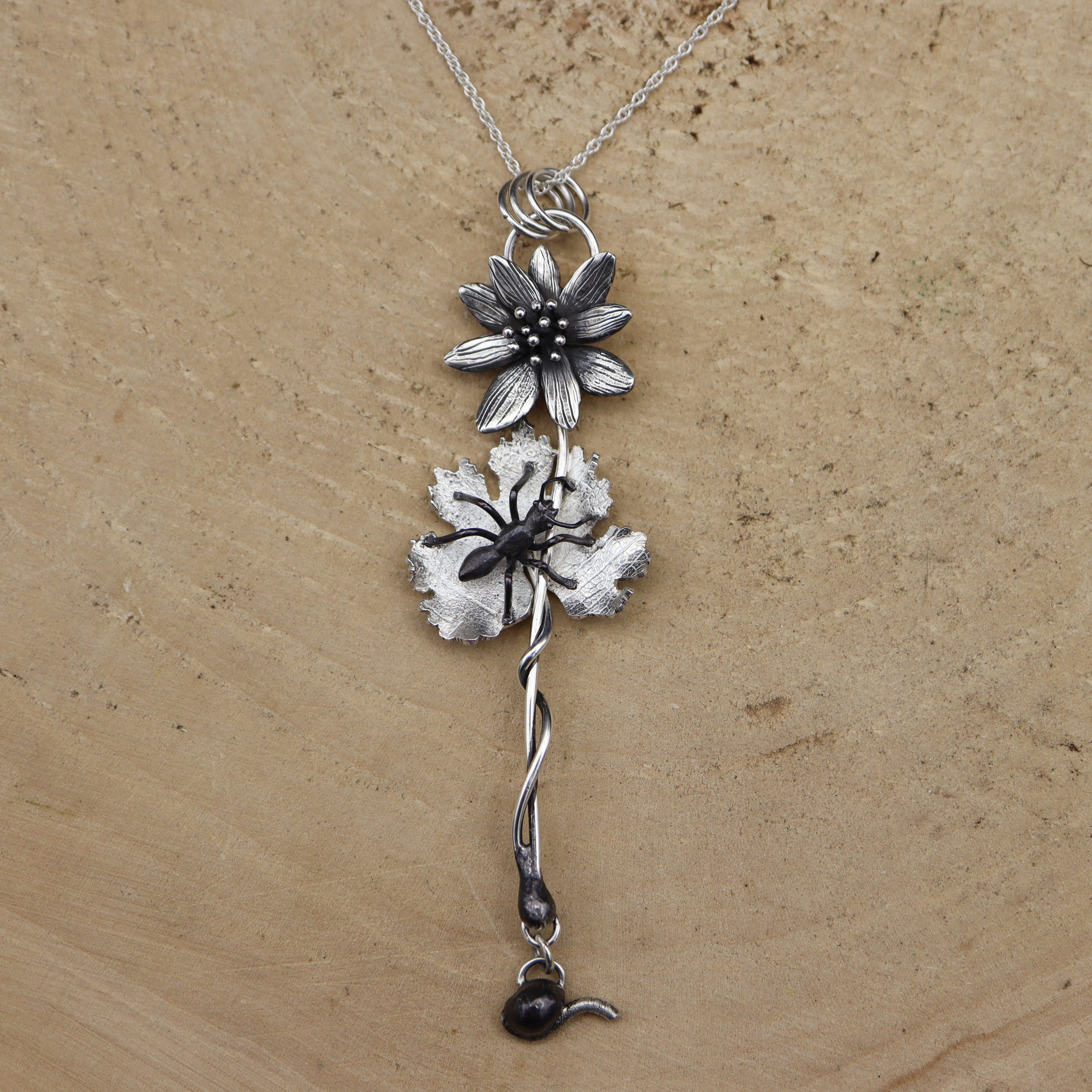
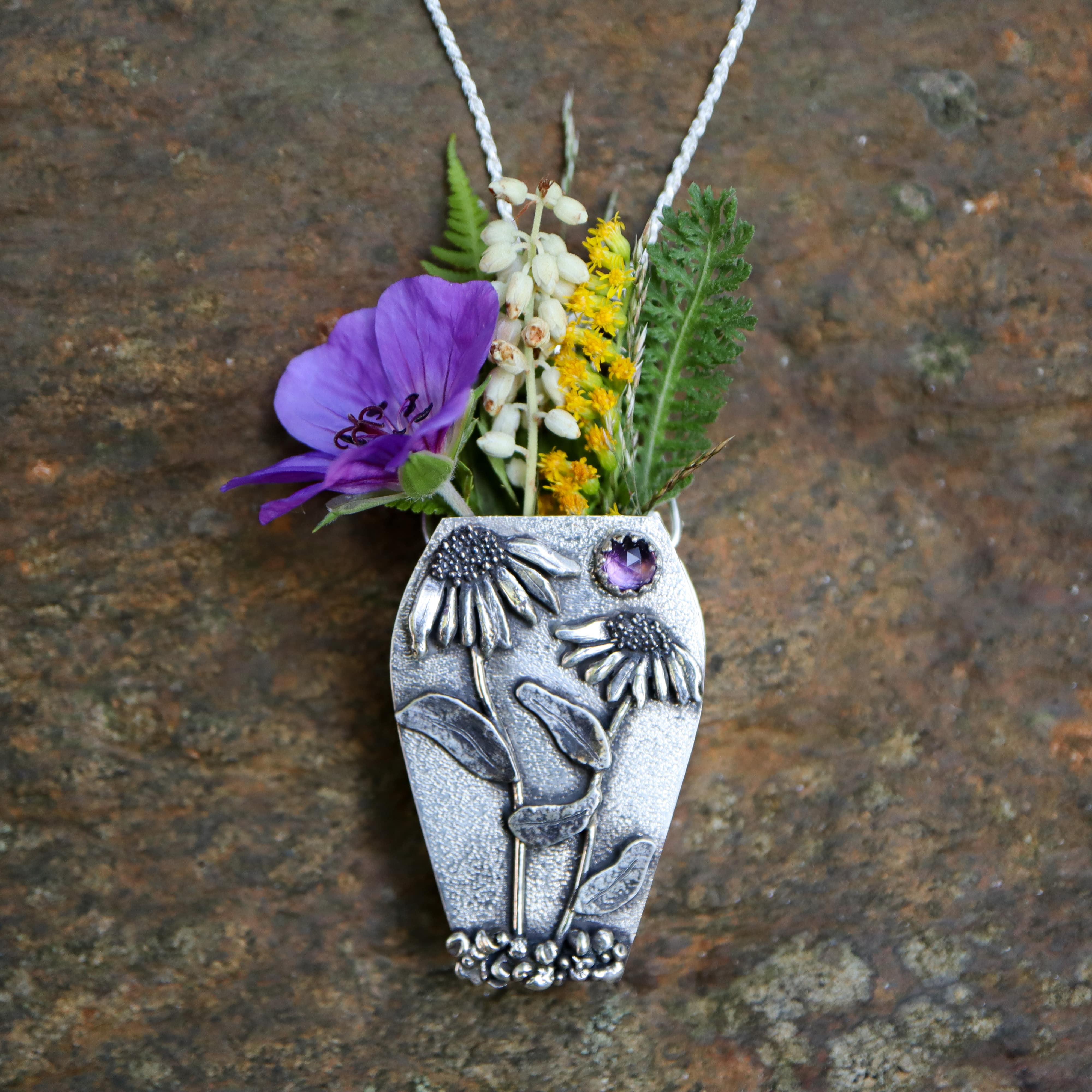
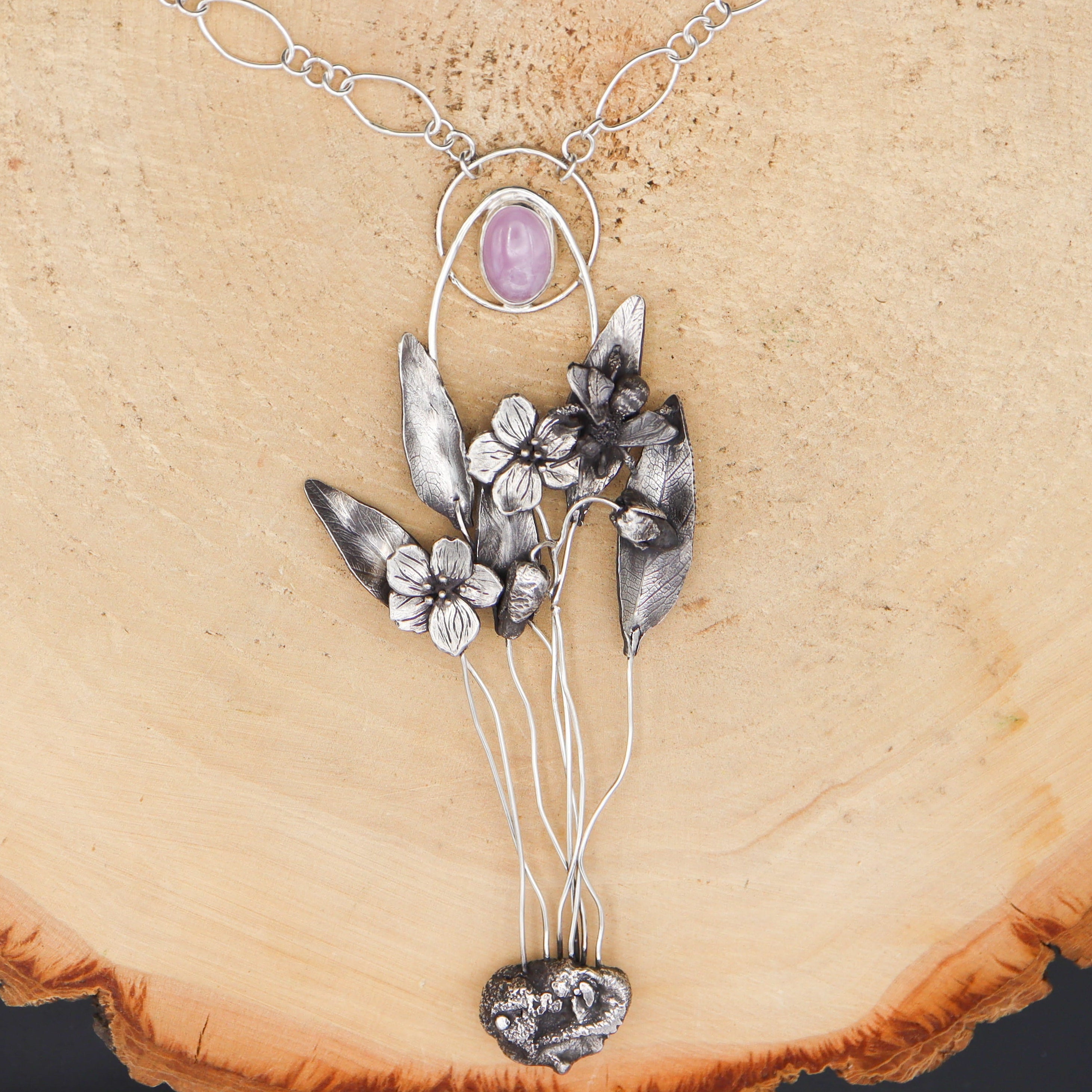
This is the relationship that Antoinette and Aurelia celebrate. Antoinette is a sterling silver ant necklace and Aurelia is a sterling silver ant brooch, and both of them are carrying out this essential work in a bloodroot forest. They are, as far as I know, the only jewelry in the world that celebrates myrmecochory. You can find them both in the Spring Ephemerals and Their Native Insects collection.
The Numbers That Will Stop You in Your Tracks
According the the Xerces Society, approximately one third of all non-woody understory plant species in eastern North American deciduous forests depend on ants to disperse their seeds. Not some of them. Not the unusual ones. One third of everything growing at ground level and eye height in your forest understory has a relationship with ants.
Because of this, scientists have given Aphaenogaster ants a very specific and weighty designation. They call them keystone species. The word keystone comes from architecture, the wedge-shaped stone at the top of an arch that holds the whole structure together. Remove it and everything collapses. A keystone species in an ecosystem works the same way. Remove Aphaenogaster from the eastern hardwood forest and the whole system of spring ephemeral plants begins to unravel. The forest stops planting itself. The flowers that depend on myrmecochory for dispersal stop spreading. And because those plants support dozens of native insects and the birds that eat them, the collapse does not stop there.
A tiny ant, carrying a seed too heavy for any other dispersal method, is holding the whole spring forest together.
Amelia is a sterling silver ant on a round leaved violet necklace and earring set, celebrating this exact relationship between Aphaenogaster ants and one of their favorite myrmecochorous plants. Round leaved violets are one of the spring ephemerals that depend most heavily on ant dispersal, and if you look closely at Amelia's necklace you will find her carrying out her essential work right there among the tiny yellow flowers.
Amelia Ant Necklace & Earrings
Who Is Aphaenogaster Exactly
If you spend time walking in the woods of New Hampshire you have almost certainly walked through Aphaenogaster territory without knowing it. These ants occur in extraordinarily high densities in hardwood forest habitats, up to 1.3 nests per square meter of forest floor. (I had to look this up) They are among the most abundant ants in eastern North American hardwood forests. Their colonies are between a few hundred and about six hundred workers, led by a single queen. They are omnivores, foraging for insect prey as well as seeds, and their foraging patterns follow the seasons closely, ramping up in spring precisely when the ephemerals are releasing their seeds and slowing down in winter.
They nest in leaf litter and woody debris on the ground. Old logs. Rotting stumps. The deep accumulated layers of fallen leaves that build up over years in undisturbed forest. Their nests are woven into the very substrate that most people rake away every autumn without a second thought.

Why Leaving Your Leaves Matters More Than You Knew
You have probably heard about leaving your leaves by now. The Leave the Leaves movement has done wonderful work communicating that leaf litter is habitat for fireflies, woolly bears, luna moths, and dozens of other creatures that overwinter in the fallen leaves of autumn. All of that is true and all of it matters.

But here is one more reason to put down the rake. Aphaenogaster ants nest in leaf litter and woody debris. Disturb that habitat and you disturb the ants. And disturbing the ants means the spring ephemerals lose their planting crew. A raked yard does not just look tidier. It removes one of the most important ecological relationships in the northeastern forest from your piece of the landscape.
Leave your leaves for the fireflies. Leave them for the woolly bears. And leave them for the small and tireless and extraordinary ants who have been planting your spring wildflowers since long before anyone thought to notice.
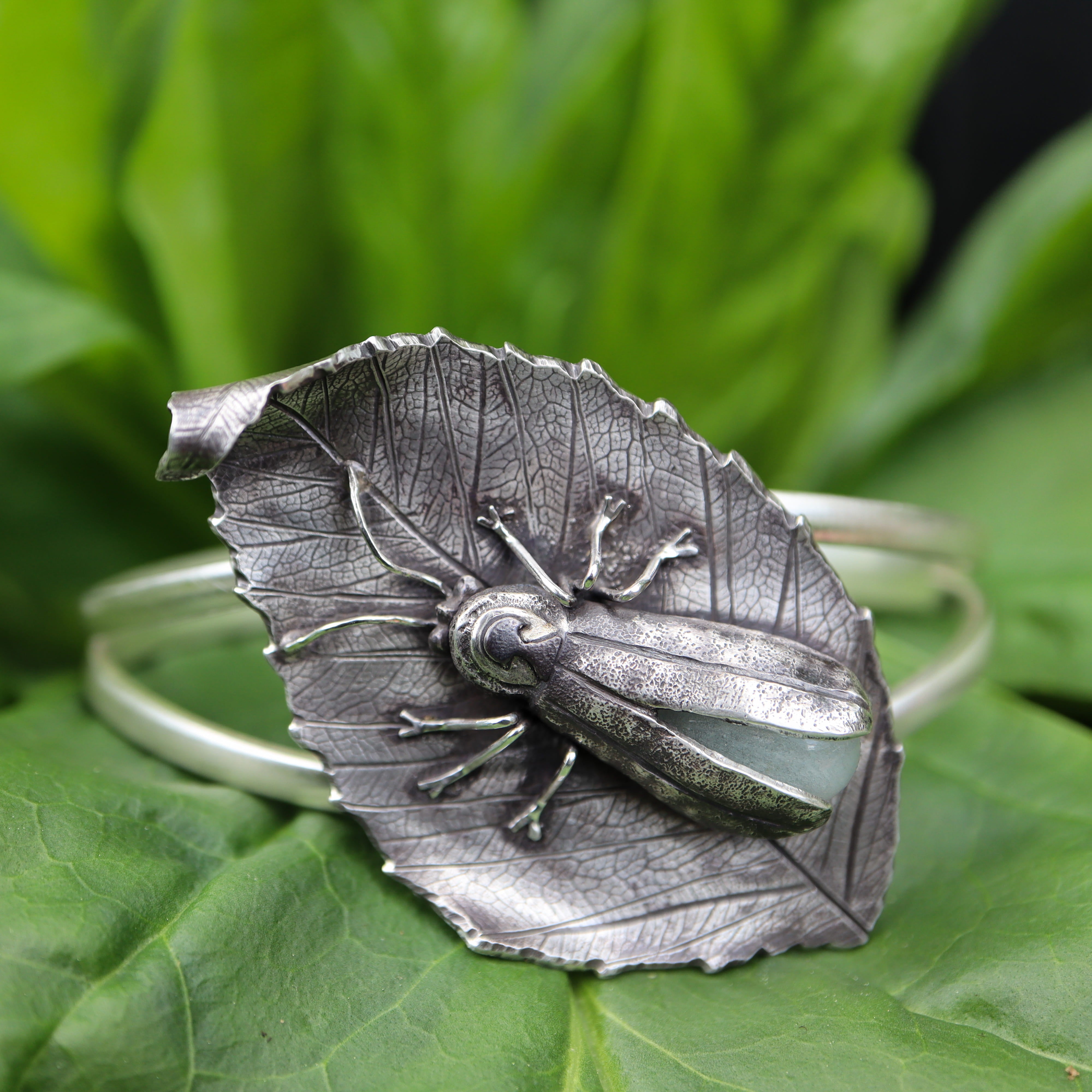
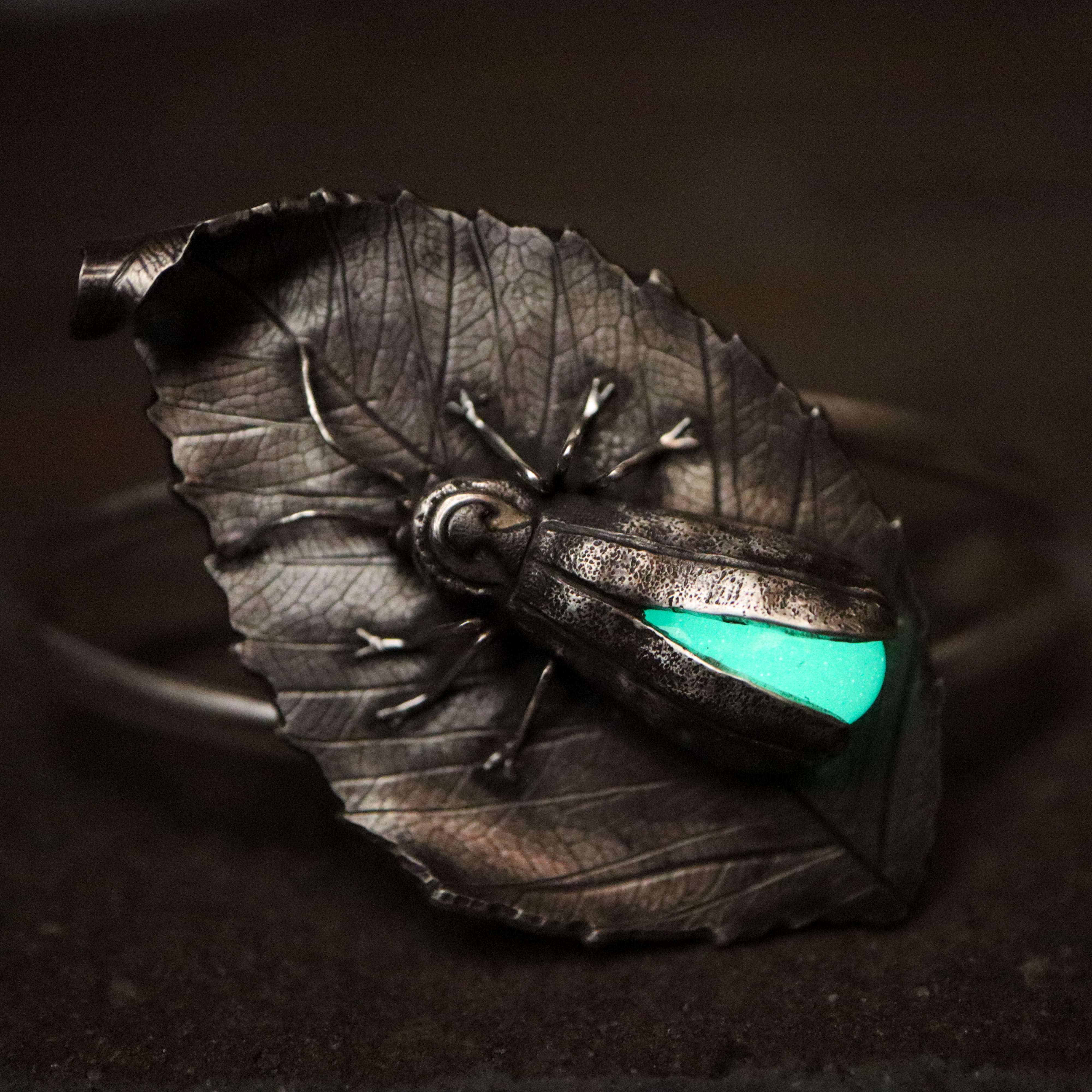
If you love the Leave the Leaves message, the collection also includes Lucia, my 14k gold firefly necklace on a real sterling silver leaf, and the woolly bear caterpillar necklace, both celebrating creatures that depend on fallen leaves for their survival. You can find them in the Leave the Leaves collection. Leave the Leaves Collection
A Threat You Might Not Know About
There is a quiet crisis happening in the forest understories of the northeastern United States that does not get nearly enough attention. The European fire ant, Myrmica rubra, was accidentally introduced to North America in 1908 and has been spreading steadily through mesic forest habitats ever since, including the forests of New Hampshire. It prefers exactly the habitat that Aphaenogaster calls home.
Where Myrmica rubra establishes itself, it displaces the native Aphaenogaster. And where Aphaenogaster disappears, the myrmecochory that the spring ephemerals depend on begins to break down. The forest loses its gardeners. The plants that evolved over millions of years to have their seeds carried by a very specific native ant find themselves with an invasive ant that does not do the same job in the same way.
This is not a distant problem. It is happening in forests right now, in New England, quietly and largely unseen. The best thing any of us can do is protect the undisturbed forest habitat that Aphaenogaster needs to thrive, support native plant conservation efforts, and leave the leaves.
The Spring Forest Is an Act of Cooperation
Many of the spring ephemerals you have ever loved in the forest, the trilliums and bloodroot and spring beauties and trout lilies and round leaved violets, are growing where they are in large part because of ants. Not because an ant decided anything consciously, of course. But the accumulated effect of millions of individual foraging trips, millions of seeds carried underground, millions of elaiosomes eaten and seeds discarded in exactly the right compost, has shaped the spring forest that we walk through every April and feel grateful to be alive in.
A bloodroot seed that falls without ant help lands next to its parent plant, competes with it for light and water, and has a much harder road to survival. A seed carried underground by an ant lands in rich compost, protected from seed predators, in conditions that give it a genuine advantage. The ant is not the only way these plants spread. But it is by far the best way, and the way these plants have spent millions of years optimizing for. When you find a patch of trilliums or a colony of bloodroot growing in a hollow you have walked past a hundred times, there is a very good chance that ants put them there, one small seed at a time, over more seasons than anyone has stopped to count.
The ant does not know it is doing something beautiful. It is just eating. But the beauty happens anyway, one small seed at a time, year after year, for longer than anyone can fully measure.
Wear the Forest
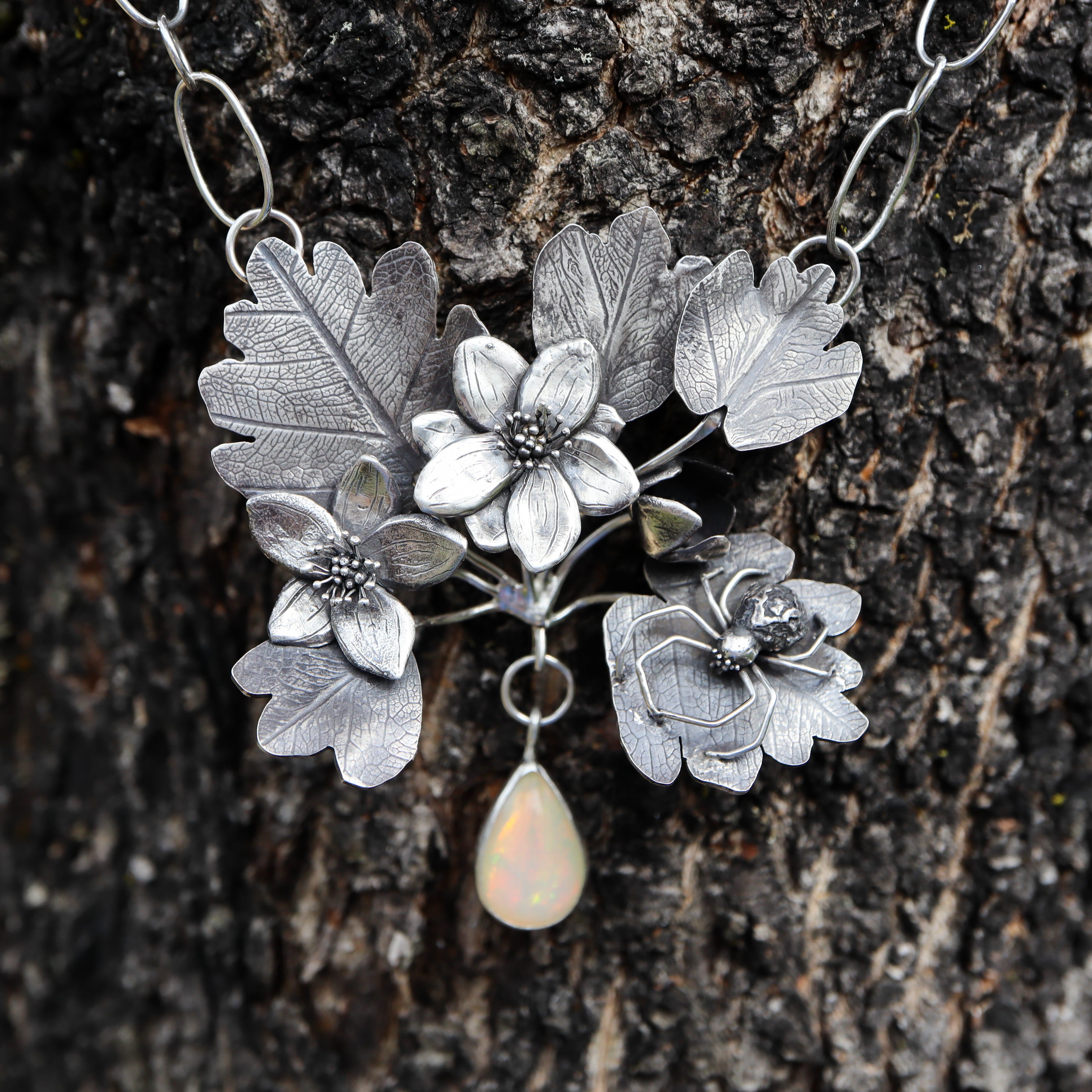
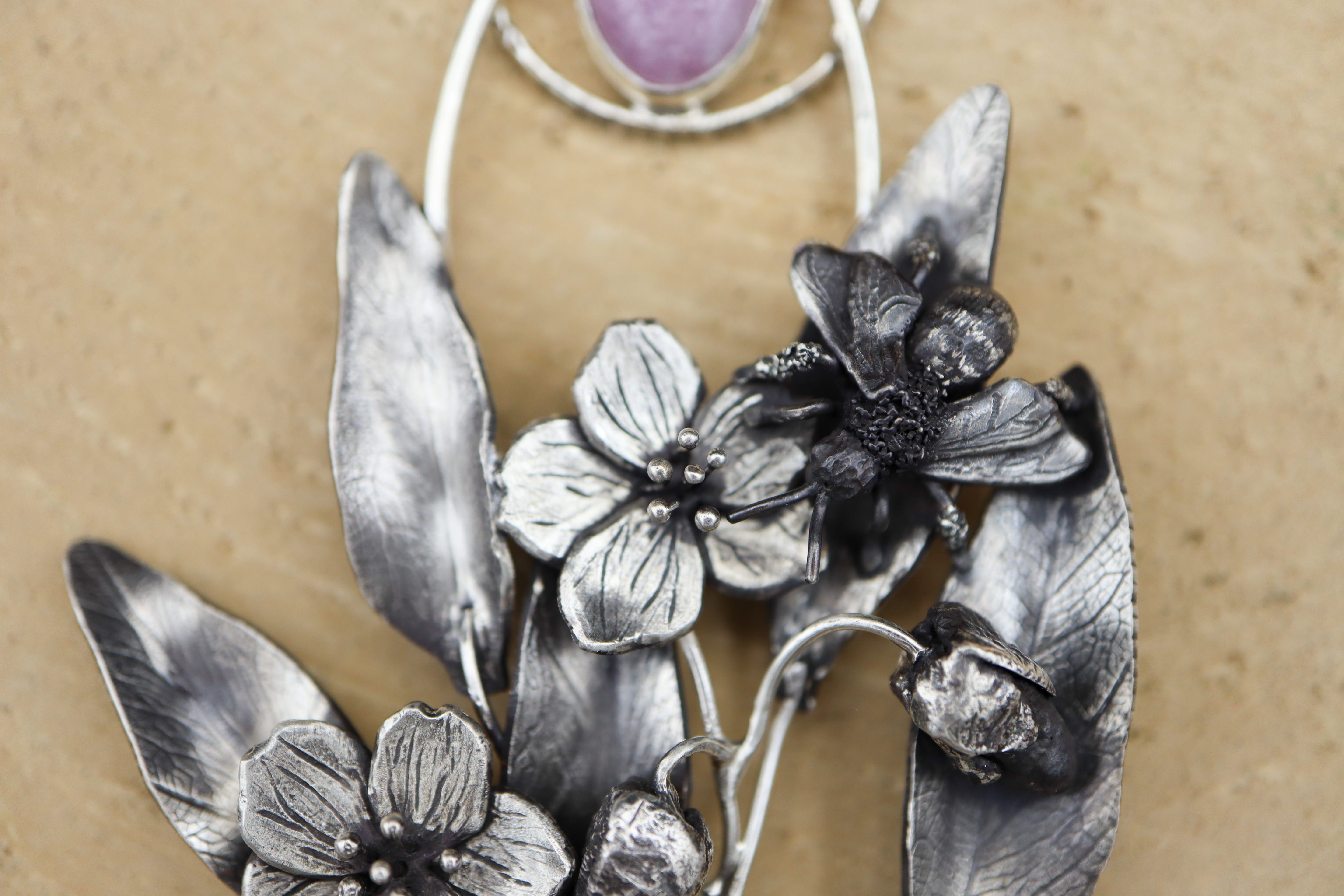
If this story moved you the way it moves me every time I think about it, I made a small collection of one of a kind sterling silver jewelry celebrating these exact relationships. Antoinette and Aurelia are two ants carrying out the essential work of myrmecochory in bloodroot forests. Amelia tends her round leaved violet. Penelope the spring beauty mining bee has devoted her entire life to one single wildflower. Petal the bee fly is not what she appears to be at all. And Kalea the goldenrod crab spider can change her own color to match her flower.
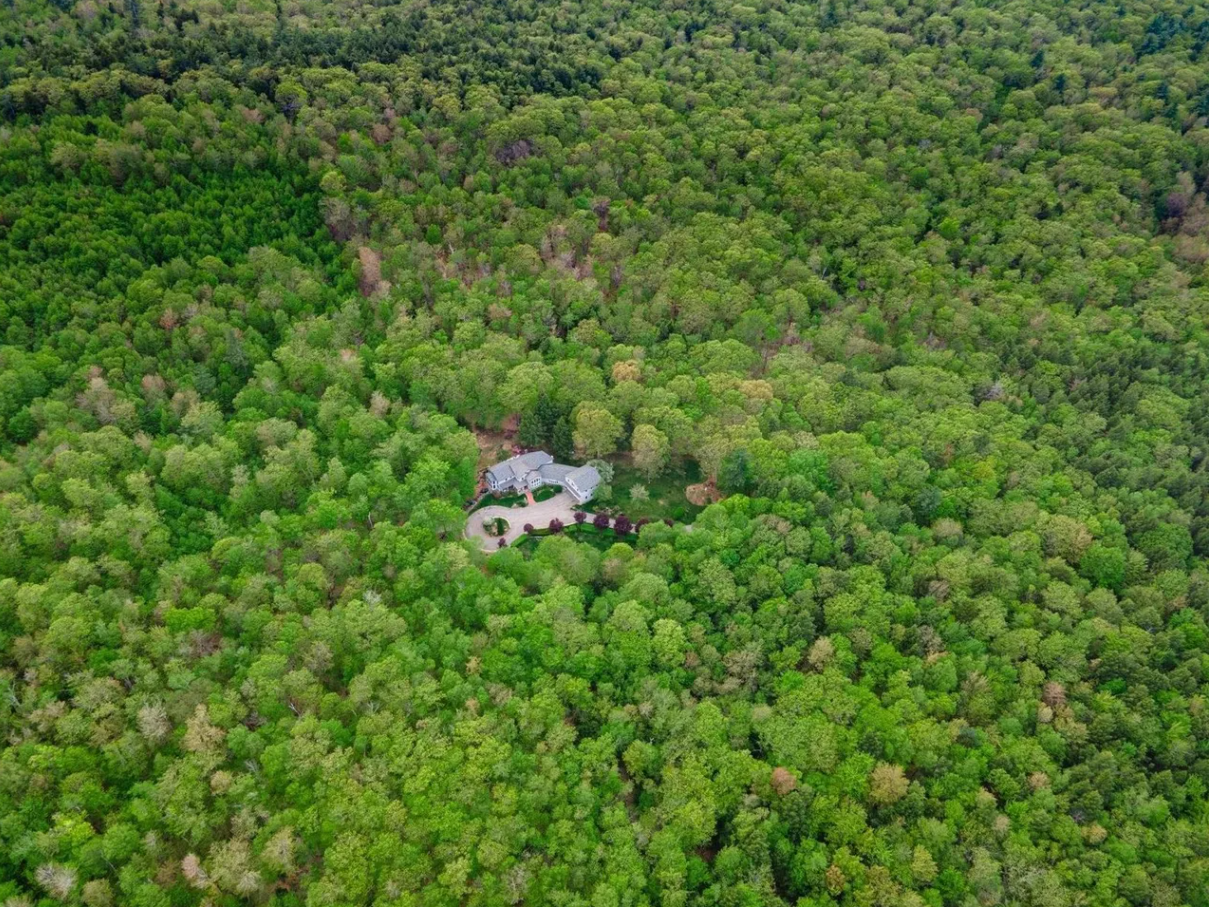
Every piece in the Spring Ephemerals and Their Native Insects collection was made entirely by hand in my little studio in the New Hampshire woods. Each one is one of a kind and when it finds its home it will never be made again exactly like this.
Full Spring Ephemeral Wildflower and their Insects jewelry Collection
And if this is the kind of nature story that makes you want to stop and look more closely at the world around you, I write about it regularly in my newsletter The Rambling Naturalist. I would love to have you there.
With love from the woods,
Tamara and Max





Leave a comment
This site is protected by hCaptcha and the hCaptcha Privacy Policy and Terms of Service apply.