

Article: The Moth That Wears Its Own Head as a Crown
The Moth That Wears Its Own Head as a Crown

Friday night, I headed out alone to The Caterpillar Lab for Moth Night, and I want to tell you about it before the details get fuzzy in my memory the way most of my photos got fuzzy in the dark that night. Ugh!
Wandering the Lab Before Dark
I got there before sunset, around 8:30pm, which meant I had time to wander through the Lab itself first. If you have never been, it is exactly what it sounds like. A small building absolutely full of caterpillars, moths, butterflies, and other insects, in every strange shape an insect can take.

I stood in front of a Monkey Slug for a long moment just trying to convince myself it was a real animal and not a tiny dried leaf someone had glued fluffs to. Going alone (cough, without Joshua, cough) meant I could linger as long as I wanted at each enclosure without anyone tapping their foot, which is exactly how I like to do this kind of thing. Staring at him longer, it looks like a shrunken, fuzzy sea creature that lost an argument with a hairdryer. They don't even have legs! It is described as "a fairly unassuming brown moth as an adult." But I am here to tell you that they are adorable. You have to look them up because they have the fuzziest little leg warmers I have ever seen as a moth. Like, you will squeal with joy when you see them!

The Giant Swallowtail caterpillar survives by looking unappetizing rather than hidden. Its blotchy brown and white coloring mimics bird droppings so convincingly that most people, and prey, mistake it for exactly that on first glance. Bird poop! And unlike many of its swallowtail relatives, it keeps up the disguise through every stage of its caterpillar life. Sometimes they are even found kind of curled up to really look the part.

And tucked onto a birch twig was a caterpillar doing its best impression of, well, a twig. It took me an embarrassingly long time to find it in my own photo. I zoomed in for you because I am a doofus.
Then the sun went down, and I went outside to the sheets.

The Sheets, and My One Good Photo
If you have never been to a moth night, the setup is simple. You hang a white sheet, shine a bright light on it, and wait. What shows up is entirely out of your hands. Some nights the sheet is covered in moths within minutes, some nights there might be almost nobody. I learned that every insect "has a season" when they are most likely to show up.
Friday brought some new to me moths almost immediately! I just couldn't get my phone to take good photos of these guys because of the artificial lighting in the dark. I should have researched the secrets of doing this before going. Eye roll.
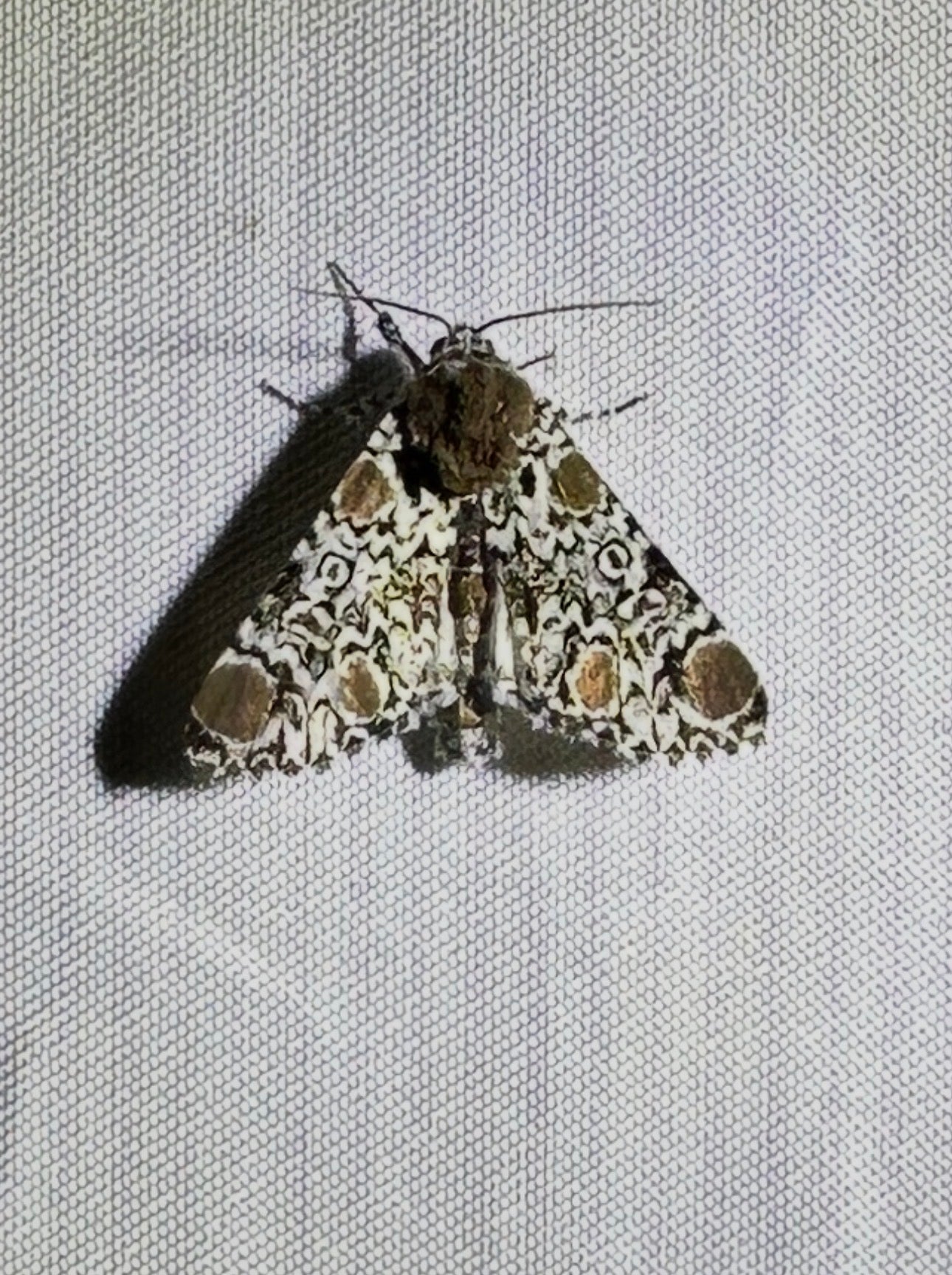
But I got one. Just one, really and truly in focus. My one kind of ehh photo! And it turned out to be worth the wait.

Meet the Harris's Three Spot Moth
Meet the Harris's three spot moth (Harrisimemna trisignata), and take a good look at those wings. They are patterned like dappled shade on a forest floor, a scatter of pale spots and dark scrollwork that would disappear instantly against tree bark or a scrap of dead leaf. It is a smaller moth, not even an inch and a half across, and it turns out most people go their whole lives without knowingly seeing one. Its range stretches from eastern Canada down through much of the central and eastern United States, so it is not rare, exactly. It is just very good at not being seen.
Here is the part that made me want to write about it, though. The adult moth is lovely, but it is nothing compared to what the caterpillar gets up to.

Photo credit: Jack Forrester, @jackthropod
The Harris's three spot caterpillar does not rely on one disguise. It has several, stacked. From one angle it can look like a smear of dirt and old cobweb, easy to walk right past. From behind, it holds itself in a way that mimics an alert jumping spider, even raising its hind end like a spider rearing back. And then there is the strangest trick of all: as it grows and molts, it keeps its old shed head capsules and stacks them, one on top of the last, into a strange little tower it wears like a crown. If something gets too close, it will whip that tower of old heads around as a warning. Somewhere along the way, evolution decided that the best defense was to wear your own past as a weapon. Tiny weirdo!

This photo is also part of a print The Caterpillar Lab sells, taken by the executive director of The Caterpillar Lab, Sam Jaffe. Notice their caterpillar backend that looks like the face of a jumping spider? If you love bizarre bugs even half as much as I do, their Instagram is a treasure trove and well worth the follow. I am so excited to force Jack to be my friend! Ha ha ha!
That was part of my Friday night adventure! A whole evening of new friends with a shared love, animals that would rather not be noticed, and the strange, wonderful lengths they go to for it.
A Moth in My Own Hair
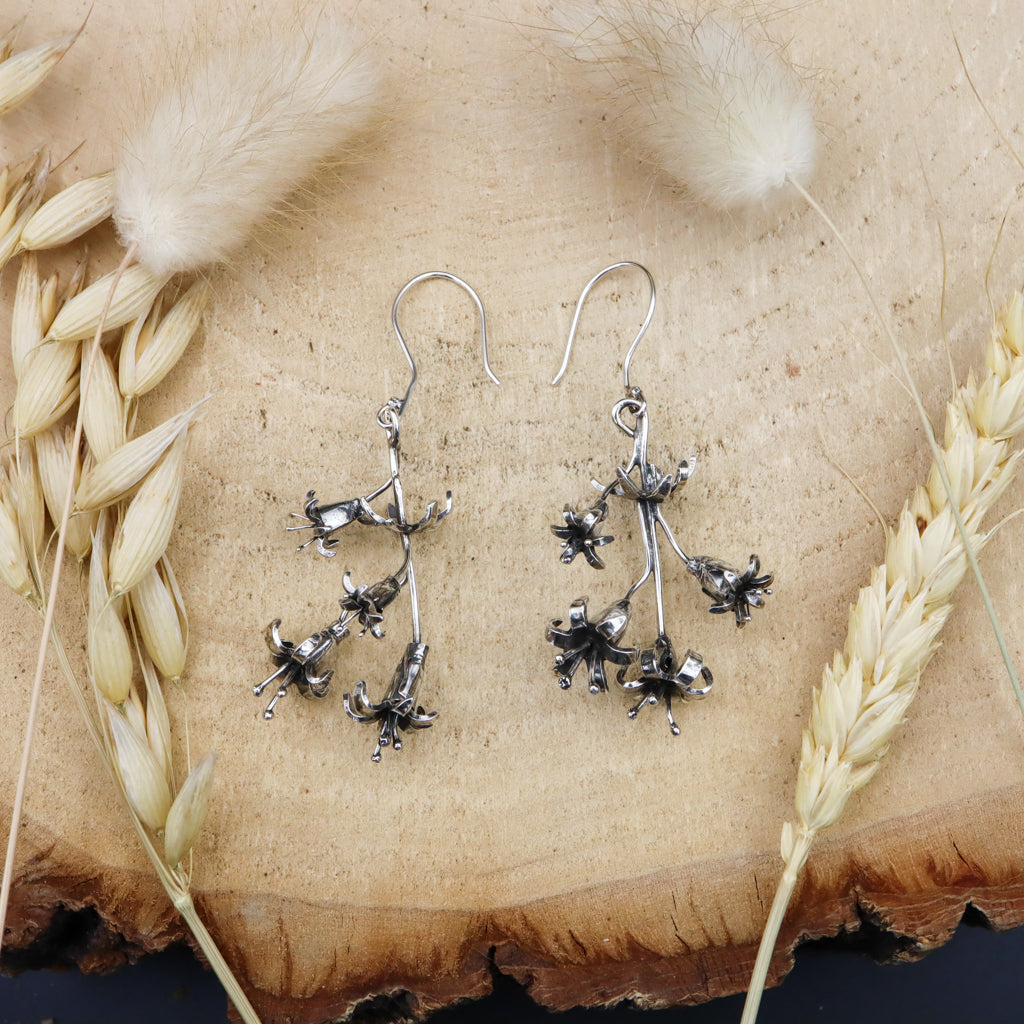
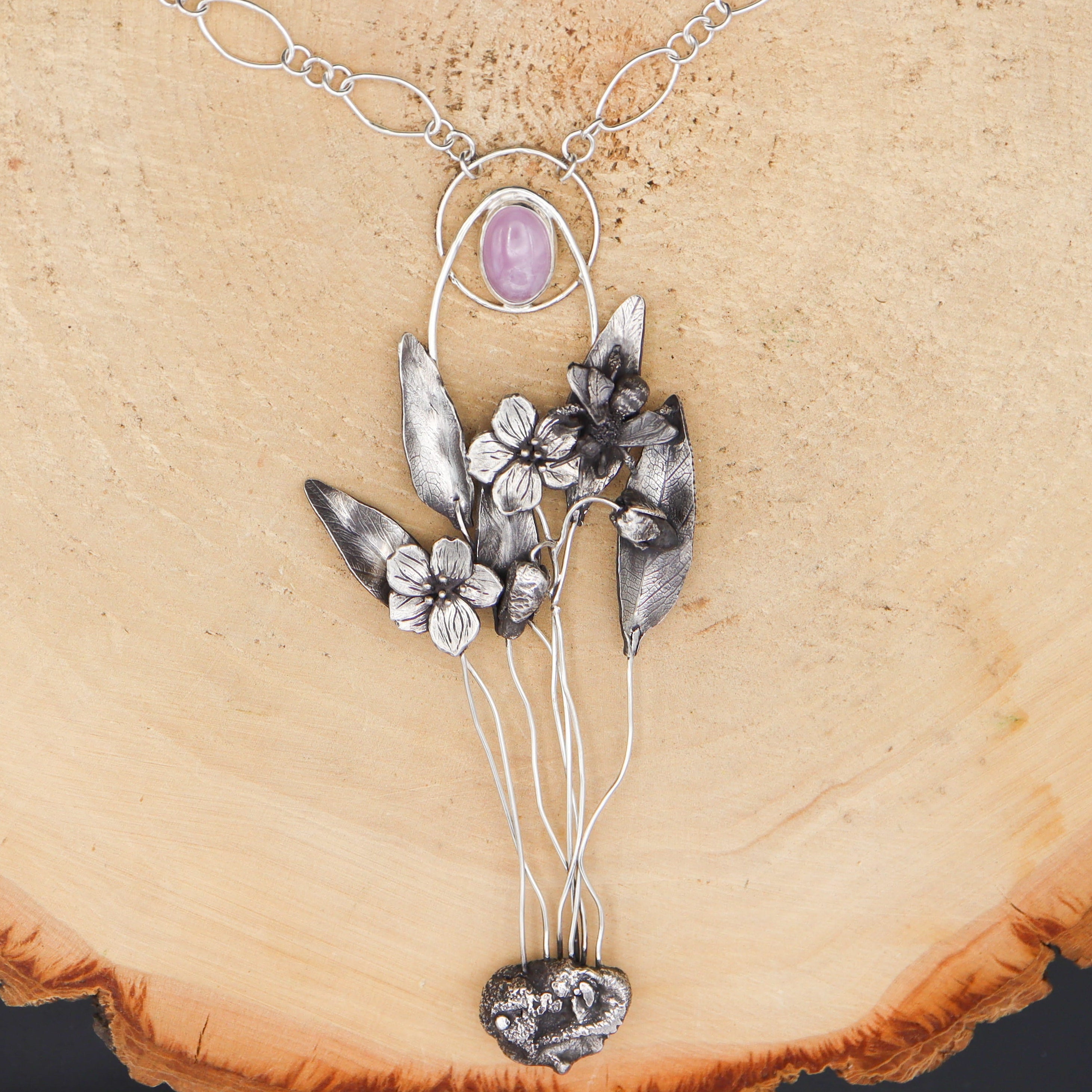
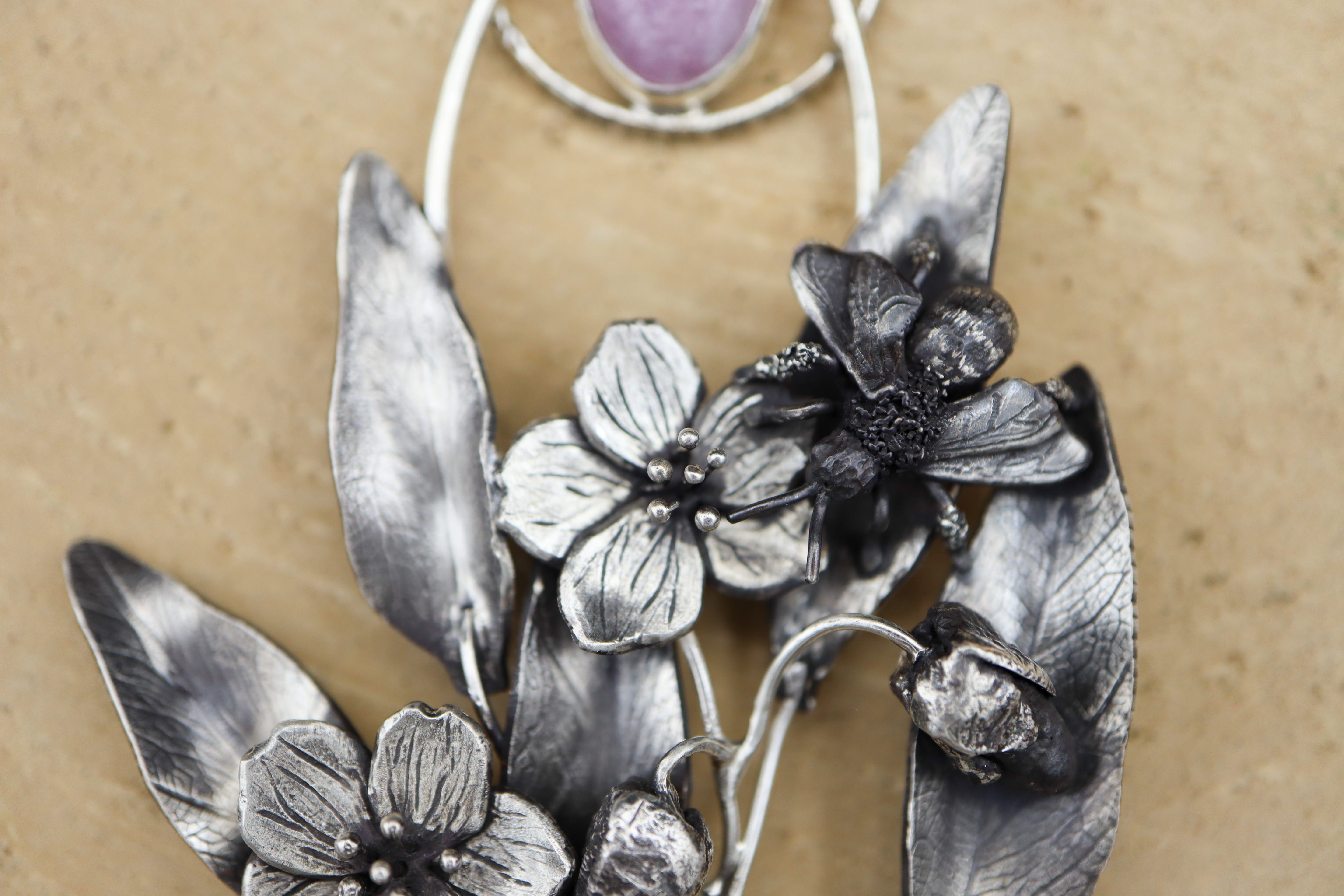
Speaking of moths, all of this had me reaching for one of my favorite pieces to show you today: the Milkweed Tussock Moth hair comb. I took it outside today to catch it in real daylight (with the deer flies!) instead of my usual bathroom mirror lighting, and I am glad I did. Please remember that I have no business styling my own hair. I still think this hair comb made my messy fur look pretty! I'd be excited to see what someone that does know what they are doing can do with it.

I want to say something about the Milkweed Tussock Moth itself, because I see the same misunderstanding play out in monarch groups every year. Someone posts a photo of these caterpillars, black, orange, and white and unmistakably not a monarch, on their milkweed, and the comments fill with people asking how to get rid of them.

Photo taken by Anita Fernandez and shared on The McLane Center Audubon Society page
But the Milkweed Tussock Moth (Euchaetes egle) is a native species too, and milkweed is its host plant every bit as much as it is the monarch's. It evolved alongside milkweed the same way monarchs did, and it carries the same toxic defense: the cardiac glycosides it eats as a caterpillar make it unpalatable to predators, advertised with that same bold striped warning coloration.

In practice, the two species mostly avoid direct competition anyway. Monarch caterpillars tend to favor young, tender milkweed shoots, while tussock moth caterpillars are content working through the older, tougher leaves the monarchs pass over. A milkweed plant covered in tussock moth caterpillars is not a plant under attack from an outsider. It is a plant doing exactly what a native host plant is supposed to do, feeding more than one species that depends on it. If you can, please help to educate others about this when you see it, because it is exhausting and sad.

Just Trying to Survive
So that is the thread running through this whole post, really. A moth with a wardrobe of disguises, a caterpillar that wears its own past as a warning, and a species so many well meaning people mistake for a problem when it is simply doing what it has always done. Trying to survive. They are just trying to survive in a world full of things that would eat or kill them, and every strange trick they have is still not enough.
I hope you look at your own milkweed a little differently this week. And look extra fancy while doing it, with a moth in your fur.
Until next time, or until I meet a cool bug,
Tamara :)





Leave a comment
This site is protected by hCaptcha and the hCaptcha Privacy Policy and Terms of Service apply.